Free Shipping over $75 | Ships Out Same-Day | SAVE 30% STOREWIDE, CODE "HALLOWEEN30"
Is Limonene a Terpene? Understanding D-Limonene and Where It Comes From
Yes, limonene is a terpene. Specifically, it is classified as a monoterpene (a hydrocarbon with the chemical formula C10H16), making it one of the most common terpenes found in nature.
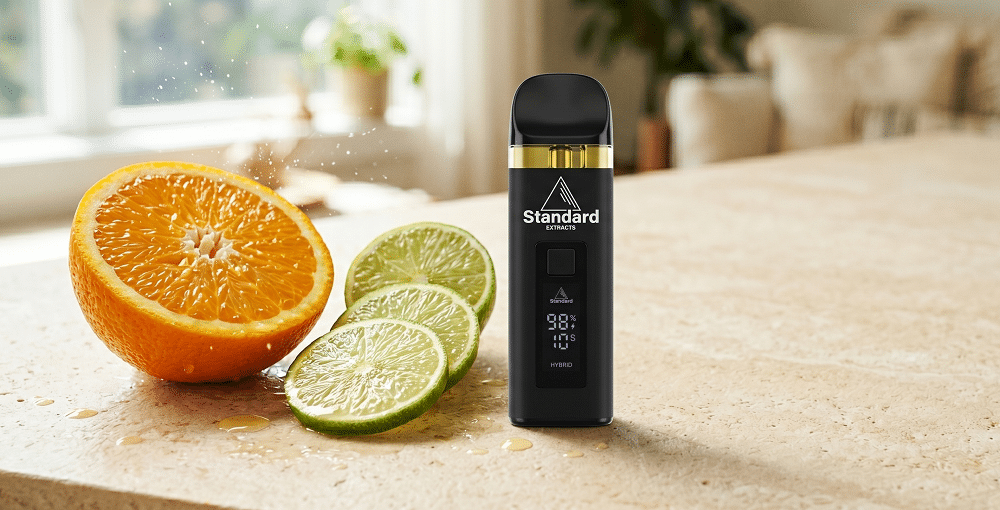
If you have ever wondered whether limonene is a terpene, you have probably smelled the answer a hundred times without knowing its name. Peel an orange, slice a lime, or crack open a citrus-forward vape, and that bright, zesty hit is limonene doing its thing.
The short answer to the title question is yes, limonene is a terpene, and a very common one at that. But the longer answer is more interesting, because there is a specific version called D-limonene that does most of the heavy lifting in the products you actually buy.
At Pure Standard Extracts, we break down what a terpene is, what makes D-limonene the headline isomer, and where this citrus compound comes from before it lands in a cartridge.Contact us today to ask which terpene-rich vape tastes closest to fresh citrus.
So, Is Limonene Actually a Terpene?
Yes. Limonene is a terpene, and more precisely it belongs to a sub-group called monoterpenes. That classification is not just trivia, because it tells you a lot about how the molecule is built and how it behaves.
What a terpene even is
Terpenes are aromatic compounds that plants produce, and they are the reason a pine forest, a lemon grove, and a hemp flower each smell so distinct. Plants make them partly to attract pollinators and partly to fend off pests, so the scent has a real job to do.
In hemp and cannabis specifically, terpenes shape the aroma and flavor of a strain. They are the difference between a batch that smells like citrus and one that smells like diesel or berry, even when the cannabinoids are nearly identical.
Why “monoterpene” matters
Every terpene is built from a repeating five-carbon building block called isoprene. A monoterpene is simply two of those units joined together, which gives limonene its molecular formula of C₁₀H₁₆.
That compact size is why limonene is so volatile and so quick to reach your nose. Lighter monoterpenes evaporate easily, which is exactly what you want from an aroma compound in a vape or an essential oil.
Where limonene sits among other terpenes
Limonene is one of several monoterpenes you will see listed on hemp lab panels, alongside familiar names like myrcene and pinene. Each one carries its own signature scent, with myrcene leaning earthy and pinene leaning sharp and forest-like.
What makes limonene stand out is how recognizable it is, since almost everyone can name that fresh citrus smell on the first try. That instant familiarity is part of why it appears so often on terpene panels and product descriptions.
How a terpene differs from a cannabinoid
People new to hemp often lump terpenes and cannabinoids together, but they are different families. Cannabinoids like Delta-8, HHC, and CBD interact with your body in their own way, while terpenes mainly drive aroma, flavor, and the overall character of a product.
That said, the two are often studied side by side. Some early research suggests certain terpenes may influence how a cannabinoid experience feels, which is part of why blends get so much attention.
One often-cited example involves limonene itself. A 2024 study from researchers at Johns Hopkins University and the University of Colorado reported that pairing D-limonene with THC reduced some of the anxiety that THC alone can trigger, though this is emerging research rather than a settled conclusion.
What Is D-Limonene, Exactly?
D-limonene is the right-handed isomer of limonene and the dominant, naturally abundant version found in citrus peels. When a label or a lab report says “limonene,” it almost always means D-limonene, so it is worth understanding what sets it apart from its mirror-image twin.
The D and the L isomer
Limonene comes in two mirror-image forms, called isomers, that share the same atoms arranged in opposite orientations. D-limonene is the right-handed version, technically the R-enantiomer, and it carries the familiar sweet citrus scent.
L-limonene, the left-handed S-enantiomer, smells more piney and turpentine-like and shows up in plants such as caraway, dill, and pine needles. Same formula, very different aroma, which is a neat example of how shape changes scent.
Why D-limonene dominates citrus
According to terpene chemistry references, D-limonene is the form that occurs most abundantly in citrus fruit peels. That is why citrus rind is the principal commercial source for the compound worldwide.
When you smell a fresh-peeled orange, you are smelling D-limonene more than almost anything else. It is the signature note of the whole citrus family, from lemons to grapefruit.
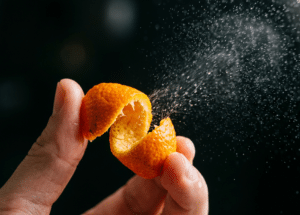
Because the peel holds the highest concentration, the oily zest you spray when you bend an orange rind is essentially pure aroma chemistry at work. That same oil is what manufacturers capture and refine for use in flavors, cleaning products, and yes, terpene-rich hemp formulas.
What “dextrorotatory” means in plain English
You may see D-limonene described as dextrorotatory, which sounds intimidating but is straightforward. It simply means the molecule rotates polarized light to the right, which is how chemists tell the two mirror-image isomers apart in the lab.
The “D” in the name is shorthand for that right-handed rotation, and the “L” in L-limonene marks the opposite. It is the same naming logic you might remember from D and L sugars in a chemistry class.
For a shopper, the practical takeaway is simpler. The D form is the bright, juicy citrus one, and it is the version doing the work in most terpene-rich products you will encounter.
Where Does Limonene Come From? (More Places Than You’d Think)
Citrus is the headliner, and for good reason. The highest concentrations of limonene sit in the rinds of oranges, lemons, limes, and grapefruit, which is why those peels are the principal commercial source for the compound.
The way it is collected is part of the story. Most commercial limonene is recovered as a byproduct of orange juice production, then separated and purified using methods like centrifugal separation and steam distillation. In other words, a huge share of the world’s limonene starts life as a leftover from your breakfast juice.
It does not stop at the fruit bowl, though. Limonene also turns up in juniper berries, peppermint, rosemary, and even the resin of trees like pine and fir, so it is woven through a surprising range of plants you already know by smell. That spread is one reason the same citrus note can feel familiar in products that have nothing to do with oranges.
It is also present in cannabis and hemp, where it ranks among the most common terpenes in the plant. In fact, limonene is widely cited as the second most abundant terpene in nature, which helps explain why it shows up in so many of the products on our shelves.
How Limonene Ends Up in Hemp Products
Most limonene in hemp vapes is added back after refining rather than carried over from the raw plant, which surprises a lot of people. When a cannabinoid like Delta-8 or HHC is refined into a clean distillate, the intense heat strips away the plant’s native terpenes along the way. What is left is a potent but largely flavorless oil.
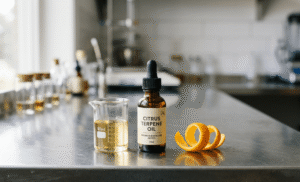
To bring the aroma and flavor back, makers add terpenes into the distillate after refining. These can be cannabis-derived terpenes pulled straight from hemp, or botanical terpenes sourced from other plants like citrus. The two are molecularly identical even though they come from different places, so a botanical limonene and a hemp-sourced limonene are the same molecule once they hit the formula.
That distinction matters more for sourcing and cost than for the molecule itself. Botanical terpenes are often easier to produce in consistent volume, while cannabis-derived versions carry the fuller profile of the original strain. Either way, the citrus note you taste in a finished cartridge was almost certainly added back on purpose rather than carried over from the raw plant.
This is exactly why transparency matters when you shop, and why we publishour third-party lab reports for the products inour cannabinoid lineup. A clear report lets you see exactly which terpenes are in a formula instead of guessing from the smell alone, which is the honest way to buy.
Where to Start With Terpene-Rich Hemp Products
Limonene is proof that the small print on a label can be genuinely interesting, and knowing what a terpene is makes you a sharper shopper. Now that you can spot D-limonene and trace where it comes from, you are in a better position to pick a product whose aroma and lab panel actually line up.
If you want help choosing a profile that fits how you like to relax, our team at Pure Standard Extracts is glad to walk you through the options before you buy. Call us today to match a terpene profile to the experience you want.
Disclaimer: These statements have not been evaluated by the Food and Drug Administration. This product is not intended to diagnose, treat, cure, or prevent any disease. For adults 21 and older. Individual results vary. Consult your healthcare provider before use, especially if you are pregnant, nursing, or taking medication.
Frequently Asked Questions
Is limonene a terpene?
Yes, limonene is a terpene, and specifically a monoterpene built from two isoprene units with the formula C₁₀H₁₆. It is one of the most common terpenes found in nature and in cannabis. Terpenes like limonene are the aromatic compounds that give plants, fruits, and hemp strains their distinct smell and flavor.
What is D-limonene?
D-limonene is the right-handed isomer of limonene, technically the R-enantiomer, and it carries the sweet citrus scent most people recognize. It is the version that occurs most abundantly in citrus peels, which makes it the dominant commercial form. When a product or lab report lists “limonene,” it almost always means D-limonene.
Where does limonene come from?
Limonene comes mainly from the rinds of citrus fruits like oranges, lemons, limes, and grapefruit, where it sits in the highest concentrations. It also occurs naturally in juniper, peppermint, rosemary, pine, and cannabis. Commercially, much of it is recovered as a byproduct of orange juice manufacturing, then purified for use in flavors and aromas.
What is the difference between D-limonene and L-limonene?
D-limonene and L-limonene are mirror-image isomers, meaning they share the same atoms in opposite arrangements. D-limonene smells sweet and citrusy and dominates citrus peels, while L-limonene smells more piney and turpentine-like and appears in plants like caraway and dill. The shape difference is what changes the aroma so dramatically.
Is limonene the same thing as a monoterpene?
Limonene is a type of monoterpene, but the two terms are not interchangeable. Monoterpene is the broad category for terpenes built from two isoprene units, and limonene is one specific member of that group. Other monoterpenes include myrcene and pinene, each with its own distinct aroma and plant sources.
Is limonene found in cannabis and hemp?
Yes, limonene is one of the more common terpenes found in cannabis and hemp plants. It contributes the bright citrus aroma you notice in certain strains and is frequently listed on terpene panels. Because distillation can strip native terpenes, many finished hemp products have limonene added back in to restore that scent and flavor.
Does limonene get you high?
No, limonene does not get you high on its own, because terpenes are aroma compounds rather than intoxicating cannabinoids. The “high” in a hemp product comes from cannabinoids like Delta-8, THC-P, or HHC, not from the terpene. That said, some early research suggests terpenes may shape how a cannabinoid experience feels overall.
Why is limonene added to vape products?
Limonene is added to vape products mainly for its bright citrus aroma and flavor, which makes the experience more pleasant and recognizable. Since refining a cannabinoid distillate removes the plant’s original terpenes, makers reintroduce limonene and other terpenes afterward. Reputable brands publish lab reports so you can confirm exactly which terpenes a formula contains.
Key Takeaways Cordyceps is a functional mushroom with a long-standing reputation for supporting energy and stamina. Many people use it before activity, although the research is still developing and it should not be treated as a sure thing. It may help some people, and that is as far as anyone
Key Takeaways Reishi is a functional mushroom with a long history in traditional wellness, where it is most often associated with calm and rest. Research is still developing, so it is best understood as a traditional ingredient and not as a treatment for anything. Reishi is most commonly associated with
Key Takeaways There is no single amount of Amanita muscaria that is safe for everyone, because products, extracts and people all differ. The careful approach is to follow the label on a lab-tested product, begin with the smallest serving and give it plenty of time. We will not give you

 Every terpene is built from a repeating five-carbon building block called isoprene. A monoterpene is simply two of those units joined together, which gives limonene its molecular formula of C₁₀H₁₆.
 According to terpene chemistry references, D-limonene is the form that occurs most abundantly in citrus fruit peels. That is why citrus rind is the principal commercial source for the compound worldwide.
 To bring the aroma and flavor back, makers add terpenes into the distillate after refining. These can be cannabis-derived terpenes pulled straight from hemp, or botanical terpenes sourced from other plants like citrus. The two are molecularly identical even though they come from different places, so a botanical limonene and a hemp-sourced limonene are the same molecule once they hit the formula.