Free Shipping over $75 | Ships Out Same-Day | SAVE 30% STOREWIDE, CODE "HALLOWEEN30"
Is Delta-8 Legal in Alabama? The Current Rules Explained
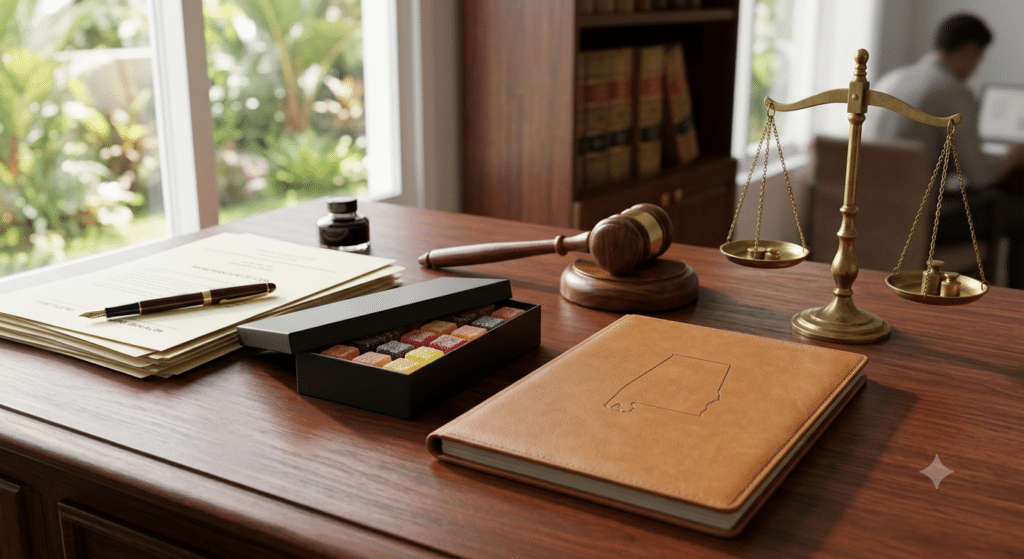
Delta-8 is not broadly legal in Alabama; it is heavily restricted and effectively banned in most forms. Under House Bill 445, smokable and vape Delta-8 products are a Class C felony, online shipments into the state are prohibited, and only ABC Board-licensed in-state retailers may sell consumable hemp to adults 21 and older. The short answer for most shoppers is that buying or possessing common Delta-8 products in Alabama now carries serious legal consequences.
Alabama has gone from one of the most relaxed hemp markets to one of the strictest in the country in a single legislative move. If you live in the state or ship products there, the rules that apply today are very different from what they were a year ago.
At Pure Standard Extracts, we believe customers deserve a straight answer about the law before they ever think about a product. That means telling you plainly when something is restricted, even when the honest answer is not the one a shopper hoped to hear.
This guide breaks down what House Bill 445 actually changed and where Delta-8 stands in Alabama right now. If you have questions about current law or compliant options in your own state, Contact us today and our team will point you in the right direction.
What does HB 445 change for Delta-8 in Alabama?
House Bill 445, signed by Governor Kay Ivey in May 2025, replaced Alabama’s loosely regulated hemp market with one of the tightest frameworks in the nation. It rolled out in two phases, and both are now in force.
The table below summarizes where the most common Delta-8 product forms stand under the law as it reads today.
Product form
Alabama status under HB 445
Notes
Delta-8 vapes and disposables
Banned (Class C felony)
“Smokable” includes any product heated by battery to produce vapor; in effect since July 1, 2025
Smokable Delta-8 flower and pre-rolls
Banned (Class C felony)
All smokable hemp prohibited since July 1, 2025
Delta-8 edibles and gummies
Heavily restricted
Licensed in-state retailer only; 10 mg total THC per serving, 40 mg per container
Online shipment into Alabama
Prohibited
Direct-to-consumer shipments banned as of January 1, 2026
Minimum purchase age
21 and older
Applies to all consumable hemp products
The smokable and vape ban (Phase 1)
The first phase took effect on July 1, 2025, and it banned all smokable hemp statewide. Alabama defines “smokable” broadly to include any product heated by combustion or battery to produce smoke or vapor, which sweeps in Delta-8 flower, pre-rolls, and vape disposables alike.
That definition is the reason vapes are treated so harshly. A battery-powered Delta-8 vape is legally a smokable hemp product in Alabama, and selling or possessing one is no longer a gray area.
The consumable framework (Phase 2)
The second phase took effect on January 1, 2026, and it built a full regulatory system around the products that remain legal. The Alabama ABC Board now licenses every manufacturer, distributor, and retailer that handles consumable hemp.
Mandatory third-party lab testing, clear THC labeling, potency caps, and a 10% excise tax all apply under this framework. The system is designed to channel any remaining legal sales through a small set of licensed, in-state storefronts.
The synthetic-conversion problem
Most commercial Delta-8 is made by chemically converting CBD, and HB 445 classifies psychoactive cannabinoids produced by that kind of synthesis or conversion as unlawful hemp products. Because nearly all marketed Delta-8 involves a conversion step, it is genuinely unclear whether any currently sold Delta-8 product qualifies as legal in Alabama at all.
That uncertainty is not a loophole to lean on. For practical purposes, a shopper should treat common Delta-8 products as restricted rather than assume an exception applies.
The reason this matters is that “naturally occurring” Delta-8 exists in hemp only in trace amounts, far too low to fill the products on the market. Almost every gummy, tincture, or cartridge sold as Delta-8 relies on the CBD conversion step that HB 445 targets, so the legal question is not academic. When the statute and the manufacturing reality point in opposite directions, the safer reading for an Alabama buyer is the stricter one.
Is Delta-8 a felony in Alabama?
For the most popular product forms, yes. Selling or possessing Delta-8 vapes, disposables, or smokable flower in violation of HB 445 is a Class C felony in Alabama.
A Class C felony in the state can carry fines of up to $15,000 and a potential prison term in the range of one to ten years. Those are not minor administrative penalties, and they apply to unlawful hemp products generally, not only to traditional marijuana.
The exposure is not limited to retailers. Possession of an unlawful hemp product can also fall under the same felony classification, which means an individual buyer who brings a banned vape into the state is taking on real legal risk. This is one reason we will not encourage anyone to order restricted Delta-8 products into Alabama.
Can you still buy Delta-8 in Alabama?
Only in narrow circumstances, and only for the product forms that survive the law. The days of open online ordering and unlicensed retail sales of Delta-8 in Alabama are over.
Who is allowed to sell
Under the consumable framework, only ABC Board-licensed retailers may sell consumable hemp products. Permitted locations generally fall into three buckets: dedicated hemp dispensaries, pharmacies, and grocery or liquor stores that hold the proper license.
An unlicensed seller is selling an unlawful product by definition, regardless of what the packaging claims. That is true even if the same product would be legal one state over.
For a shopper, the practical test is simple: the seller must hold a current Alabama ABC Board license, and the product must be a consumable form that survives the law. A vape shop, a gas station, or a website without that license cannot make a Delta-8 sale lawful no matter how the label is worded. If you cannot confirm the license, the safest assumption is that the sale falls outside what HB 445 permits.
The online shipping ban
This is the single most important point for anyone used to buying hemp online. As of January 1, 2026, direct-to-consumer online shipment of consumable hemp into Alabama is banned, which means a national retailer cannot lawfully ship Delta-8 to an Alabama address.
We want to be clear that this rule applies to us too. We do not present Alabama as an open shipping destination for restricted products, and we encourage in-state shoppers to confirm what is legal before buying anything. You can review our published third-party lab reports to understand the transparency standards we hold our products to, even where those products are not available for sale.
Age limits and potency caps
Where consumable hemp is sold legally through a licensed retailer, the buyer must be 21 or older. The law also caps potency for edibles at 10 mg of total THC per serving and 40 mg per container.
These caps are a meaningful change from the unregulated market that came before. Many products sold elsewhere exceed those limits and would not qualify for legal sale in Alabama even through a licensed storefront.
How does federal law interact with Alabama’s rules?
This is where a lot of confusion comes from, and it is worth slowing down. The 2018 Farm Bill federally legalized hemp-derived cannabinoids that contain less than 0.3% Delta-9 THC, and that federal baseline is what many “Delta-8 is legal” headlines refer to.
States are free to be stricter than the federal floor, and Alabama has chosen to be. A product can satisfy the federal definition of hemp and still be an unlawful hemp product under HB 445, because Alabama’s restrictions on synthetic conversion, smokable forms, and online sales sit on top of the federal rule. For a fuller picture of how this plays out nationally, see our overview of where Delta-8, THC-P, and HHC stand legally.
This split is why a product can be marketed as “federally legal hemp” and still expose an Alabama buyer to a felony charge. Federal law sets a floor, not a ceiling, so a compliant Certificate of Analysis showing under 0.3% Delta-9 THC does not override Alabama’s separate bans on smokable forms, synthetic conversion, and inbound shipping. Treat the federal hemp definition as a starting point that your own state can and, in Alabama’s case, does narrow considerably.
One more point on the legislative picture. During the 2026 session, lawmakers introduced bills such as SB 1 and SB 321 that would have classified Delta-8 and related cannabinoids as Schedule I controlled substances, but both measures failed to advance, leaving HB 445 as the governing law. Because this area changes quickly, none of this is legal advice; verify the current Alabama statute and consult a licensed attorney before relying on any rule described here.
Where Delta-8 legal status leaves Alabama shoppers
The honest takeaway is that Delta-8 is effectively off the table for most Alabama shoppers in its common vape and smokable forms, and even edibles are confined to licensed in-state retailers under strict caps. Pretending otherwise would not serve anyone who could face a felony charge for getting it wrong.
The smarter move is to understand your own state’s rules first and lean on companies that are transparent about compliance and lab testing. At Pure Standard Extracts, we would rather lose a sale than steer someone toward a product the law does not allow where they live. Call us today if you want help understanding the current legal landscape and what compliant options look like in your area.
Frequently Asked Questions
Is Delta-8 a felony in Alabama?
For the most common product forms, yes. Selling or possessing Delta-8 vapes, disposables, or smokable flower in violation of HB 445 is a Class C felony in Alabama, punishable by fines up to $15,000 and a possible prison term of one to ten years. The felony classification covers unlawful hemp products generally, not only traditional marijuana.
Can you buy Delta-8 in Alabama?
Only in limited cases. Since January 1, 2026, consumable hemp may be sold only by ABC Board-licensed in-state retailers such as licensed dispensaries, pharmacies, and qualifying grocery or liquor stores, to buyers who are 21 or older. Smokable and vape Delta-8 products cannot be sold at all, and online shipments into the state are prohibited.
What did HB 445 change?
House Bill 445 replaced Alabama’s relaxed hemp market with one of the strictest frameworks in the country. It banned all smokable hemp as of July 1, 2025, then on January 1, 2026 added ABC Board licensing, mandatory lab testing, THC labeling, a 21-and-over age limit, edible potency caps, a 10% excise tax, and a ban on direct-to-consumer online shipments into the state.
Can you order Delta-8 online and ship it to Alabama?
No, this is not allowed. As of January 1, 2026, direct-to-consumer online shipment of consumable hemp into Alabama is prohibited under HB 445, so a national retailer cannot lawfully ship Delta-8 to an Alabama address. We do not treat the state as an open shipping destination for restricted products, and in-state shoppers should confirm what is legal before purchasing anything.
Is Delta-8 legal under federal law but illegal in Alabama?
This situation is possible, and it is a common source of confusion. The 2018 Farm Bill federally permits hemp-derived cannabinoids under 0.3% Delta-9 THC, but states may impose stricter rules. A product can meet the federal hemp definition and still be an unlawful hemp product in Alabama because of HB 445’s limits on synthetic conversion, smokable forms, and online sales.
What is the legal age to buy hemp products in Alabama?
The minimum age to purchase any consumable hemp product in Alabama is 21 under HB 445. This applies to every legal sale made through a licensed retailer, and there is no younger threshold for lower-potency products. Retailers are required to operate under the ABC Board framework, which includes age verification as part of compliance.
Are Delta-8 gummies legal in Alabama?
Only under tight conditions. Delta-8 edibles may be sold legally only by an ABC Board-licensed in-state retailer, to adults 21 and older, and they must stay within the potency caps of 10 mg total THC per serving and 40 mg per container. Many gummies sold in other states exceed those caps and would not qualify for legal sale in Alabama.
Did Alabama recently pass a new Delta-8 ban?
Lawmakers introduced bills during the 2026 session, including SB 1 and SB 321, that would have classified Delta-8 and related cannabinoids as Schedule I controlled substances and dismantled the existing framework. Both bills failed to advance, so HB 445 remains the governing law. Because hemp legislation changes quickly, always verify the current Alabama statute before relying on any summary.
Disclaimer: These statements have not been evaluated by the Food and Drug Administration. This product is not intended to diagnose, treat, cure, or prevent any disease. For adults 21 and older. Individual results vary. Consult your healthcare provider before use, especially if you are pregnant, nursing, or taking medication.
Key Takeaways A Delta-8 gummy starts as hemp extract, gets blended into a warm gelling base, then set in moulds and finished. The tricky part is keeping the mix even so every piece comes out the same. Hemp is extracted, the extract is blended into a warm gelling base along
Key Takeaways Fruit flavours dominate the Delta-8 gummy category because they sit well alongside the taste of hemp extract. Flavour is mostly a preference question, though it can hint at how a product was built. Fruit is the overwhelming answer. Berry, citrus, tropical and stone fruit turn up most across
Key Takeaways Live rosin gummies are edibles made with a solventless hemp extract rather than a refined, neutral base. The difference shows up mostly in how they taste, since the extract carries the plant’s own character. Live rosin gummies are edibles built around live rosin, a solventless extract pressed from