Free Shipping over $75 | Ships Out Same-Day | SAVE 30% STOREWIDE, CODE "HALLOWEEN30"
What Does “Lab-Tested CBD” Mean—and Why Does It Matter?
Disclaimer: This article is educational and not medical advice. Speak with a qualified healthcare professional about your specific situation.
If you’ve ever flipped a CBD bottle and spotted the phrase “lab-tested”, you’ve probably wondered: Who tested it? For what?And how do I know it’s legit? The answers aren’t always obvious on a label, and that’s exactly why this guide exists.
At Pure Standard Extracts, we believe “lab-tested” should be more than a buzzword. It should help you decide, quickly and confidently, whether a product is worth your trust. In the next few minutes, you’ll learn how “lab-tested” is supposed to work, what a Certificate of Analysis (COA) actually shows, and the simple checks that separate marketing talk from real quality.
We won’t drown you in jargon. Instead, we’ll show you where to look, what to look for, and how to spot red flags so you can shop smarter and feel good about what you’re putting in your body. Ready to decode “lab-tested” the right way? Let’s dive in.
If you’ve ever asked, “Is this CBD actually what it claims?”, you’re in the right place. In a few minutes, you’ll know:
What lab-tested and third-party tested really mean.
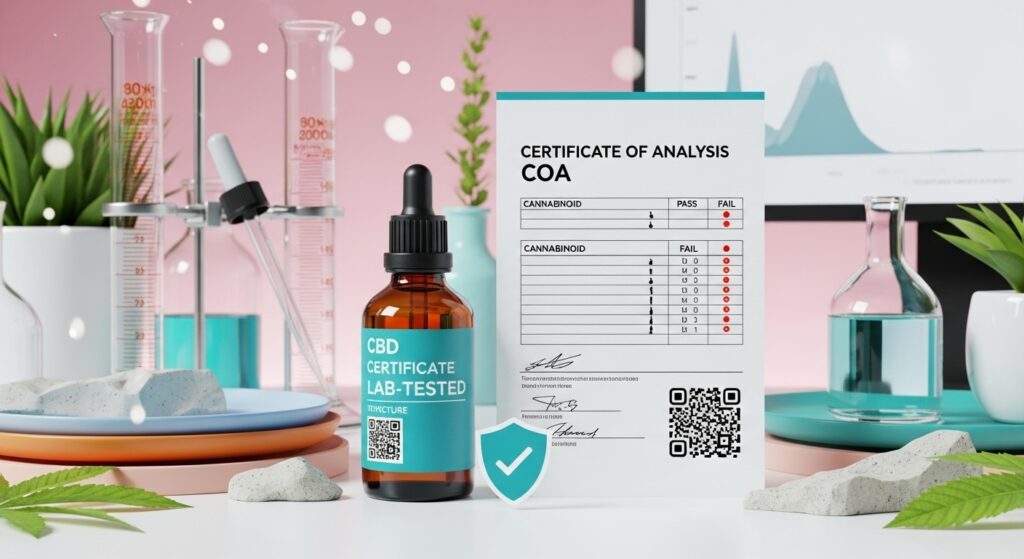
How to read a Certificate of Analysis (COA) in 6 simple steps.
The red flags to avoid.
How Pure Standard Extracts makes COAs easy to find and understand—so you can shop with confidence.
What “Lab-Tested CBD” Means in Practice
Lab-tested isn’t a buzzword; it’s a process with three essentials:
Third-party lab: Testing is performed by an independent laboratory and not the manufacturer, using validated methods and calibrated instruments.
Batch-specific reports (COAs): Each production batch/lot gets its own Certificate of Analysis, so you can match the product you’re holding to the exact test results.
Comprehensive panels: A quality COA typically covers:
Potency (cannabinoid profile): CBD, THC, and total cannabinoids, often in mg/g or mg/unit.
Contaminants:
Heavy metals (e.g., lead, arsenic, cadmium, mercury)
When you see ND (Not Detected) on contaminant lines, it means the substance was below the lab’s limit of detection (LOD) or limit of quantitation (LOQ). This is another way of saying “none detected at levels that matter to the instrument/method.”
Why Lab Testing Matters (For You)
Safety & purity: Screening catches what you don’t want, and that’s metals, pesticides, leftover solvents, microbial hazards.
Label accuracy: Potency testing confirms that the CBD per serving is as advertised, so you’re not overpaying for weak product or unintentionally taking more than you intend.
Legal confidence: Many buyers want compliant THC levels; potency data helps you make informed choices.
Trust & transparency: Public, batch-matched COAs with scan-to-verify links show a brand is confident in its quality.
How to Read a CBD COA (Step-by-Step)
Step 1: Match your batch/lot number
Find the batch/lot on your product label (or outer carton).
Open the COA and confirm the batch/lot matches exactly.
Why this matters: It proves the test reflects the same product you’re holding.
Step 2: Confirm the potency panel
Look for CBD (and total cannabinoids) in mg/g, mg/mL, or mg per unit (e.g., per gummy or capsule).
Cross-check these numbers with the label claim.
Why this matters: You want the value you paid for and predictable results.
Step 3: Check THC values
Verify that Δ9-THC (and total THC, where reported) aligns with what you expect to purchase.
Why this matters: Some buyers require lower THC levels; the COA is your proof.
Step 4: Review contaminant panels
Heavy metals: Look for ND/Pass across the common metals.
Pesticides: Should show ND/Pass for the tested panel.
Residual solvents: Results should be ND/Pass per method limits.
Microbial testing: Should meet safe thresholds (Pass).
Why this matters: Purity and manufacturing quality directly impact safety.
Step 5: Understand ND / LOQ / LOD
ND = Not Detected (below instrument detection).
LOD/LOQ are method limits that define the smallest amounts that can be detected/quantified.
Why this matters: ND doesn’t mean a literal zero; it means no detectable amount using validated lab methods.
Step 6: Verify authenticity & freshness
Lab name, report date, and method should be visible.
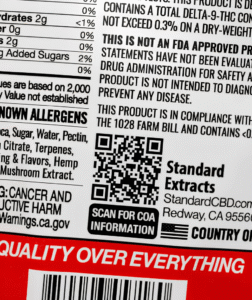
If there’s a QR code or verification link, scan it—many labs host results for validation.
Check that the test date is reasonably recent for your batch.
Why this matters: You want real, current results, not a generic sample from a different batch.
COA Mini-Cheatsheet
What to check
Why it matters
Where to find it
Batch/Lot #
Confirms the COA matches your product
Label & COA header
CBD per serving
Verifies label accuracy and value
Potency panel
THC value
Helps align with personal/legal preferences
Potency panel
Heavy metals
Safety (ND/Pass expected)
Contaminants panel
Pesticides
Safety (ND/Pass expected)
Contaminants panel
Residual solvents
Manufacturing quality
Contaminants panel
Microbial tests
Safety (Pass expected)
Contaminants panel
Report date & lab
Authenticity and freshness
COA header/footer
QR/verification link
Confirms the COA is legit
COA footer or QR on label
Need a hand? We’re happy to walk through your COA with you—reach out to support and we’ll decode it together.
Common Red Flags (And What to Do)
No batch/lot number on the COA or product.
COA shows only potency—no contaminants.
Very old report date for a current product.
No lab name, no method identifiers, or a non-functional QR.
Inconsistent units that make potency hard to compare (mg/mL vs. mg/unit with no serving size).
What to do: Ask the seller for the correct, batch-matched COA or choose a product with transparent, current results you can verify.
Pure Standard Extracts: Our Testing Promise
Third-party, batch-specificCOAs for every product we sell.
Potency + contaminants tested on each batch.
Easy access: Scan the QR on your label or visit our COA lookup page to search by batch.
Human support: Have questions? Share your COA with our team—we’ll help you interpret it in minutes.
Final Takeaway
Lab-tested CBD means an independent lab verified the potency and purity of the exact batch you’re buying. That translates to safer choices, accurate labels, and real transparency. Five minutes with a COA can save you from guesswork—and help you choose products that are worth your trust.
Key Takeaways Reishi is a functional mushroom with a long history in traditional wellness, where it is most often associated with calm and rest. Research is still developing, so it is best understood as a traditional ingredient and not as a treatment for anything. Reishi is most commonly associated with
Key Takeaways There is no single amount of Amanita muscaria that is safe for everyone, because products, extracts and people all differ. The careful approach is to follow the label on a lab-tested product, begin with the smallest serving and give it plenty of time. We will not give you
Key Takeaways Amanita muscaria, also called fly agaric, is the red mushroom with white spots that most people recognize from fairy tales. It is a different species from psilocybin mushrooms and from everyday functional mushrooms, and it calls for more caution than either. Amanita muscaria is a wild mushroom known