Free Shipping over $75 | Ships Out Same-Day | SAVE 30% STOREWIDE, CODE "HALLOWEEN30"
What Is HHC? A Beginner’s Guide to Its Effects, Benefits, and How It Works
HHC (Hexahydrocannabinol) is a hemp-derived, semi-synthetic cannabinoid known for offering a milder, smoother, and more stable experience than traditional Delta-9 THC. Originally created in the 1940s, it has recently surged in popularity as a legal, accessible alternative.
So what is HHC? HHC, short for hexahydrocannabinol, is a hemp-derived cannabinoid in the same family as THC that has drawn curiosity from people who already enjoy products like Delta-8 and Delta-9. A small change to its chemistry gives it a slightly different feel and a longer shelf life than ordinary THC.
AtPure Standard Extracts, we believe a smart buyer is a happy buyer, so we explain what each cannabinoid is in plain English before you ever add it to your cart. Every product we carry is lab-tested, and we would rather you understand HHC than guess at it.
Below, we break down what HHC actually is, how it is made, how it feels compared to THC, and where its legal status stands today.Contact us today to ask how HHC compares to other cannabinoids we carry.
What is HHC, and where does it come from?
HHC is a cannabinoid that occurs naturally in the cannabis and hemp plant, but only in trace amounts. Because it is so scarce in the plant, nearly all the HHC sold today is made in a lab from hemp rather than harvested directly from flower.
Its full name, hexahydrocannabinol, points to the one thing that sets it apart. Chemically it is a close cousin of THC, with extra hydrogen atoms added to the molecule, and that small tweak is what changes how it behaves.
Because it is intoxicating, HHC is meant for adults 21 and older, the same audience that reaches for hemp-derived THC products. Think of it as a relative of THC with its own personality rather than a brand-new substance with no track record.
How is HHC made from hemp?
HHC is created through a process called hydrogenation, the same basic chemistry used to turn liquid vegetable oil into a more stable solid. The goal is to add hydrogen atoms to a hemp-derived starting material so the finished cannabinoid is sturdier and more shelf-stable.
The hemp starting material
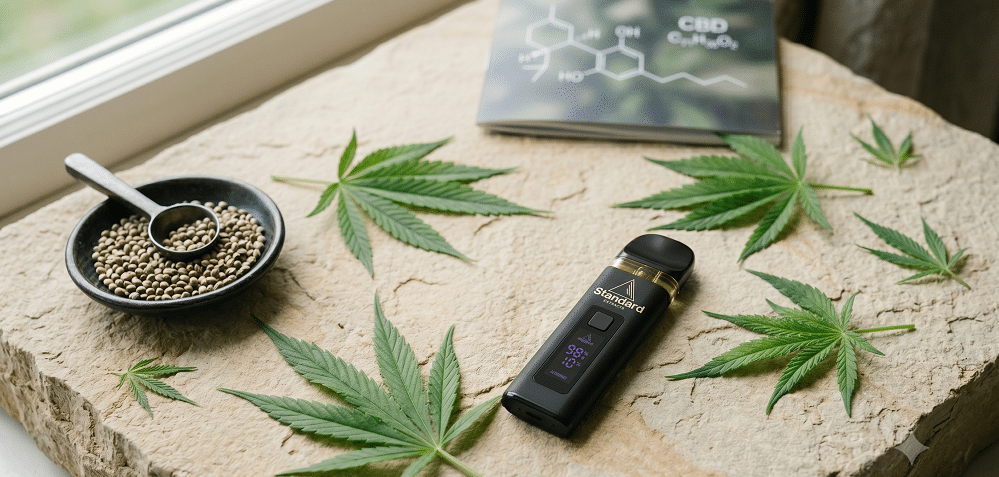
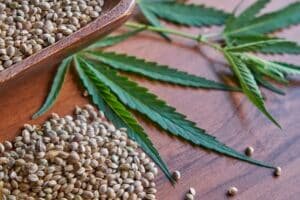
Most commercial HHC begins with CBD pulled from legal hemp, which is plentiful and inexpensive. That CBD is converted into THC and then carried into the hydrogenation step, so the chain runs from hemp, to CBD, to a THC compound, to HHC.
Because the raw material is hemp-derived, producers have long treated HHC as a hemp product. That framing is now changing at the federal level, which we cover in the legality section further down.
The hydrogenation step
Hydrogenation adds hydrogen to the THC molecule under pressure, usually with a metal catalyst such as palladium. According to chemistry references like Wikipedia’s entry on hexahydrocannabinol, this removes a double bond in the ring and leaves a more saturated, stable structure.
The practical payoff is durability. The added hydrogen makes HHC far less sensitive to heat, light, and air than raw THC, which is part of why it keeps its potency longer on a shelf.
Why HHC comes in two forms
One quirk of HHC is that the process produces two slightly different versions of the molecule, known as 9R-HHC and 9S-HHC. Research summarized by sources like Wikipedia shows 9R binds to the body’s CB1 receptors much more strongly than 9S, so the active form does most of the work.
Because every batch is a mix of the two, potency can vary from one product to the next. That variability is a big reason lab testing and clear labeling matter so much with HHC, and it is something we keep an eye on with our own products.
What are the effects of HHC, and how does it compare to THC?
HHC is psychoactive, which means it produces a noticeable buzz rather than a sober, clear-headed feeling. Research on HHC is still limited, so the best picture we have comes from a mix of early lab work and what experienced users consistently report.
What users typically report
People who use HHC often describe it as similar to a classic THC high, but a touch lighter and more relaxed. Common reports include an easy, mellow body feel and, for some, a lower sense of anxiety or racing thoughts compared with stronger THC.
These are user reports and early observations, not guaranteed outcomes, and everyone reacts a little differently. The honest takeaway is that HHC tends to be enjoyed for everyday relaxation, while the exact experience depends on the product, the dose, and the person.
How HHC compares to Delta-9 THC
Delta-9 is the main THC in cannabis and the benchmark most people measure other cannabinoids against. HHC is commonly cited as roughly 70 to 80 percent as strong as Delta-9 at the same dose, though that figure varies because of the 9R and 9S mix described earlier.
The result many users notice is a high that feels close to Delta-9 but a step gentler. If you want to feel it in a fast-acting format, you can exploreour HHC vapes and start with a small amount.
How HHC compares to Delta-8
Delta-8 is the milder, more functional cannabinoid that many people use for a softer lift. By most accounts, Delta-8 lands at roughly half the strength of Delta-9, which places HHC above Delta-8 and below Delta-9 on the usual potency ladder.
So if Delta-8 feels too light for you but Delta-9 feels like a lot, HHC often sits in a comfortable middle. As always, these are general reports rather than lab-precise rankings, so the smart move is to start low and adjust.
Cannabinoid
Chemical nature
Relative strength (reported)
Shelf stability
Legality note
HHC
Hydrogenated form of THC; hydrogen added for a more saturated molecule
Commonly cited near 70 to 80 percent of Delta-9; varies by 9R/9S mix
High; resists heat, light, and oxidation
Shifting; a late-2025 federal law narrows the hemp definition
Delta-8
Natural in trace amounts; usually converted from hemp CBD
Reported around half the strength of Delta-9
Moderate
Shifting; affected by the same federal change
Delta-9
The primary THC in cannabis; the usual benchmark
The reference point others are measured against
Lower; oxidizes into CBN over time
Restricted federally above legal THC thresholds
Is HHC safe and legal right now?
HHC has a shorter research history than Delta-9, so the honest answer on safety is that data is still limited. The FDA has not approved HHC, long-term effects are not well studied, and the most sensible approach is to start with a low amount, buy lab-tested products, and never drive or operate machinery after use.
Drug testing is another practical concern worth flagging. Because HHC breaks down into metabolites similar to THC, it will likely trigger a positive result on a standard drug test, so anyone who is screened for work should treat it the same as THC. The KO Blend formula behind some of our products is one place where multiple cannabinoids appear together, so it helps to understandwhat our KO Blend is before you choose.
Legality is the part that is actively changing, so durable framing matters more than a single yes or no. The 2018 Farm Bill legalized hemp and its derivatives below 0.3 percent Delta-9 THC, which is the opening that let HHC reach the market, but in late 2025 Congress passed a federal law narrowing the hemp definition to a total-THC standard and excluding cannabinoids that are not naturally derived from the plant. That change carries a phase-in period, so check the current federal rules and your own state’s laws before you buy.
Where to start if you want to try HHC
HHC offers a middle-ground experience for adults 21 and older who already enjoy hemp cannabinoids and want something between Delta-8 and Delta-9. The smartest first step is a small dose of a clearly labeled, lab-tested product, then giving it time before you decide whether to take more.
If you are not sure which format or strength fits you, our team at Pure Standard Extracts is glad to walk you through the options before you buy. Call us today to find an HHC format and strength that feels right.
Disclaimer: These statements have not been evaluated by the Food and Drug Administration. This product is not intended to diagnose, treat, cure, or prevent any disease. For adults 21 and older. Individual results vary. Consult your healthcare provider before use, especially if you are pregnant, nursing, or taking medication.
Frequently Asked Questions
What is HHC?
HHC, or hexahydrocannabinol, is a hemp-derived cannabinoid in the same family as THC. It occurs naturally in cannabis only in trace amounts, so most HHC sold today is made in a lab by adding hydrogen to a THC molecule. It is intoxicating and intended for adults 21 and older.
What is HHC weed?
HHC weed usually refers to hemp flower that has been sprayed or infused with HHC distillate, since the plant does not produce enough HHC on its own to be meaningful. It looks like cannabis flower but gets its effect from the added cannabinoid. Like other HHC products, it is psychoactive and meant for adults 21 and up.
Is HHC the same as THC?
No, but they are close relatives. HHC is a hydrogenated version of THC, meaning hydrogen atoms have been added to the molecule, which makes it more stable and slightly changes how it feels. Most users describe HHC as similar to THC but a little milder and more relaxed.
What are the effects of HHC?
Users typically report a mellow, relaxed buzz that resembles a classic THC high but feels a touch lighter, sometimes with less anxiety. Research on HHC is still limited, so these are user reports rather than guaranteed outcomes. Effects vary by product, dose, and person, so starting low is wise.
Is HHC stronger than Delta-8?
By most reports, yes. HHC is commonly placed above Delta-8 and below Delta-9 on the potency ladder, since Delta-8 is often cited at about half the strength of Delta-9 and HHC closer to 70 to 80 percent. These are general comparisons, not lab-exact measurements, because HHC potency varies by batch.
Will HHC show up on a drug test?
Most likely, yes. HHC breaks down into metabolites that closely resemble those of THC, so standard drug-test panels will probably flag it. If you are subject to workplace or other screening, it is safest to treat HHC the same as any THC product and avoid it beforehand.
Is HHC legal?
HHC legality is shifting. The 2018 Farm Bill opened the door for hemp-derived cannabinoids, but a late-2025 federal law narrowed the hemp definition and excluded cannabinoids that are not naturally derived from the plant, with a phase-in period. Always check current federal rules and your own state’s laws before buying.
Does HHC have a long shelf life?
Yes, shelf stability is one of HHC’s standout traits. The hydrogenation that creates it makes the molecule resist heat, light, and oxidation better than raw THC, which tends to degrade over time. Stored properly in a cool, dark place, HHC products generally hold their potency well.
Key Takeaways Cordyceps is a functional mushroom with a long-standing reputation for supporting energy and stamina. Many people use it before activity, although the research is still developing and it should not be treated as a sure thing. It may help some people, and that is as far as anyone
Key Takeaways Reishi is a functional mushroom with a long history in traditional wellness, where it is most often associated with calm and rest. Research is still developing, so it is best understood as a traditional ingredient and not as a treatment for anything. Reishi is most commonly associated with
Key Takeaways There is no single amount of Amanita muscaria that is safe for everyone, because products, extracts and people all differ. The careful approach is to follow the label on a lab-tested product, begin with the smallest serving and give it plenty of time. We will not give you

 Most commercial HHC begins with CBD pulled from legal hemp, which is plentiful and inexpensive. That CBD is converted into THC and then carried into the hydrogenation step, so the chain runs from hemp, to CBD, to a THC compound, to HHC.
 Delta-9 is the main THC in cannabis and the benchmark most people measure other cannabinoids against. HHC is commonly cited as roughly 70 to 80 percent as strong as Delta-9 at the same dose, though that figure varies because of the 9R and 9S mix described earlier.