Free Shipping over $75 | Ships Out Same-Day | SAVE 30% STOREWIDE, CODE "HALLOWEEN30"
Is Delta-8 Legal in Tennessee? A Clear Breakdown
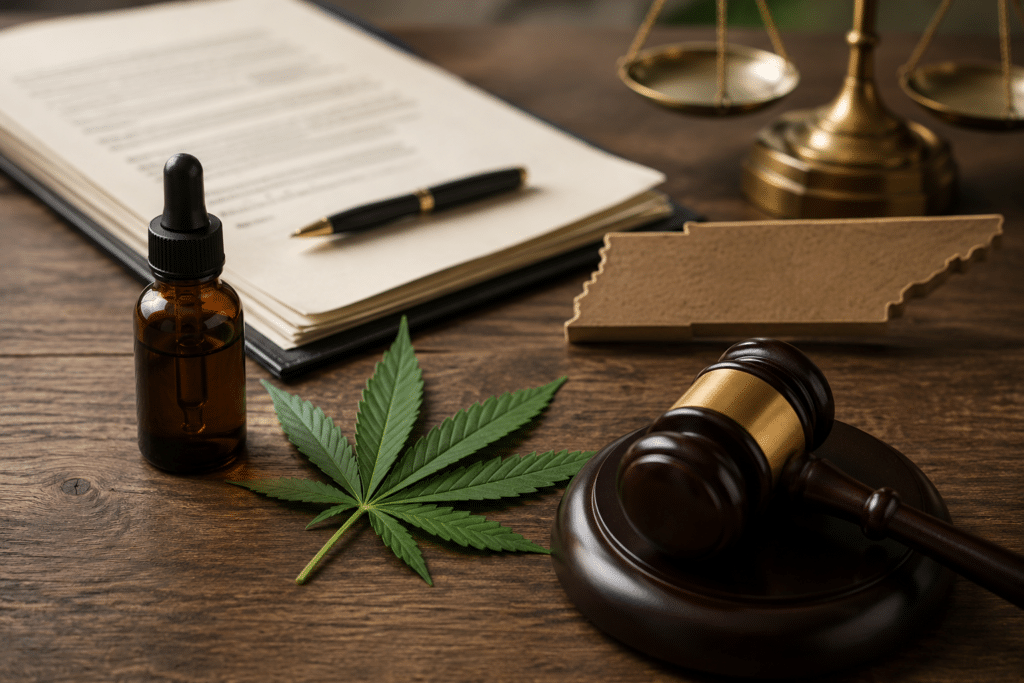
Delta-8 derived from hemp is legal in Tennessee under current state law, which regulates hemp-derived intoxicating products through age restrictions, retailer licensing, mandatory lab testing, and THC concentration standards rather than an outright ban. Products meeting those requirements can be purchased and sold legally. Laws in the cannabinoid space change quickly, so verifying compliance with the Tennessee Department of Agriculture before purchasing from any retailer is the prudent approach.
By early 2025, approximately 18 states had enacted explicit restrictions or outright bans on Delta-8 THC derived from hemp. Tennessee was not among them, which makes it one of the more permissive states in the country when it comes to adult access to hemp-derived intoxicating cannabinoids.
At Pure Standard Extracts, we track hemp regulations across the states where our customers shop, and Tennessee’s approach to Delta-8 is one of the clearer state frameworks to work through once you understand its structure. Knowing what the law requires helps you shop more confidently and avoid products that fall outside those requirements.
If you have questions about specific products or want to know how Tennessee’s requirements apply to something in our lineup, contact us today, and we’ll give you a direct answer. We keep current lab documentation on every product in our catalog.
What Puts Delta-8 in a Legal Gray Area at the Federal Level?
Delta-8 THC is a cannabinoid that occurs naturally in hemp in very small concentrations. Most commercial Delta-8 is produced by converting CBD into Delta-8 through a chemical isomerization process, which is why it sits in a regulatory space that the 2018 Farm Bill did not fully anticipate. The law legalized hemp and hemp-derived cannabinoids but did not explicitly address the status of cannabinoids produced from hemp via chemical conversion.
The 2018 Farm Bill’s definition of legal hemp centers on Delta-9 THC. Hemp must contain less than 0.3 percent Delta-9 THC on a dry weight basis. Delta-8 is a different isomer of THC and is not explicitly named in the federal statute. This left a gap that states have filled differently, with some treating Delta-8 as covered by the federal hemp definition and others enacting their own restrictions.
The DEA issued an Interim Final Rule in 2020 suggesting that synthetically derived THCs could be treated as Schedule I controlled substances, which created further uncertainty without resolving the underlying question. That rule was disputed by hemp industry groups, and no definitive federal court ruling had closed the issue as of the time this was written. States that wanted clarity on Delta-8’s status have generally had to act through their own legislatures.
What Tennessee Law Actually Says About Delta-8
Tennessee’s approach to hemp-derived intoxicating products follows a regulation model rather than prohibition. The state enacted legislation that created a licensing and compliance framework for retailers selling hemp-derived products containing intoxicating cannabinoids, including Delta-8, rather than removing those products from the market outright.
The Federal Baseline Tennessee’s Rules Build From
Tennessee’s hemp regulations operate within the federal hemp framework established by the 2018 Farm Bill. Products sold in Tennessee must meet the federal definition of hemp, which means their Delta-9 THC content cannot exceed 0.3 percent on a dry weight basis. This federal threshold sets the floor; Tennessee’s additional requirements stack on top of it rather than replacing it.
The state’s approach reflects a position held by a number of legislators that hemp-derived products meeting the federal definition should be accessible to adults while still being subject to meaningful consumer protections. The result is a framework with age restrictions, testing requirements, and retailer licensing, not a ban.
How Tennessee Defines Compliant Hemp-Derived Products
Under Tennessee’s hemp product regulations, compliant products must be derived from federally legal hemp, carry accurate labeling, include a certificate of analysis from an accredited third-party laboratory, and be sold only through licensed retailers. The certificate of analysis must confirm the product’s cannabinoid profile and verify that it meets the applicable concentration standards.
Products that lack laboratory documentation, carry misleading labels, or are sold through unlicensed channels are not compliant under Tennessee law regardless of whether their Delta-8 content would otherwise be within bounds. The compliance framework is as much about documentation and retail accountability as it is about the cannabinoid content itself.
The Age and Retail Requirements Tennessee Enforces
Tennessee requires that hemp-derived intoxicating cannabinoid products be sold only to adults aged 21 and older, with retailers implementing age verification as a condition of compliance. Retailers selling these products must operate under the appropriate state licensing, and products must be sold in packaging that meets the state’s labeling standards.
Enforcement of these requirements falls to the Tennessee Department of Agriculture, which oversees the state’s hemp program. Buyers purchasing from retailers who display current licensing and provide product lab documentation are operating within the legal framework; buyers purchasing from unlicensed or undocumented sources are taking on meaningful compliance risk.
What Compliant Delta-8 Products in Tennessee Have to Demonstrate
The documentation trail behind a compliant Delta-8 product in Tennessee matters as much as the product itself. A certificate of analysis from an accredited laboratory is the primary instrument that demonstrates a product’s legal status, since it provides the cannabinoid profile that shows compliance with both the federal Delta-9 threshold and any applicable state concentration requirements.
Buyers should look for certificates that are recent, typically dated within 12 months of the product’s manufacture date, and issued by a laboratory that is accredited under ISO/IEC 17025 or an equivalent standard. A certificate from an in-house or affiliated laboratory does not carry the same credibility as one from a fully independent third-party lab. The laboratory should test for the full cannabinoid panel, not just the headline cannabinoid, so that the total THC profile is visible.
Labeling is the second checkpoint. Compliant Tennessee products must carry accurate ingredient lists, serving size information, and cannabinoid concentration disclosures. Products with vague or missing cannabinoid information should not be assumed compliant even if the retailer claims they are. When documentation is absent, there is no reliable way to know whether the product meets Tennessee’s requirements.
How Tennessee Buyers Should Evaluate a Delta-8 Product
Buying Delta-8 in Tennessee confidently means applying the same documentation-first approach that the state’s own compliance framework requires. The products that carry the most legal standing are those that can show current third-party lab results, come from licensed retailers, and carry labeling that matches what the certificate of analysis confirms.
Start With the Certificate of Analysis Before Anything Else
The certificate of analysis is the single most important document in evaluating any hemp-derived product. It should show the Delta-9 THC content below 0.3 percent, the actual Delta-8 concentration in milligrams per serving, the full cannabinoid panel including any other THC isomers, and the identity of the testing laboratory. If a retailer cannot or will not provide this document, that is a meaningful signal about the product’s compliance status.
Our lab reports are publicly available for every product in our lineup, so you can review them before you commit to a purchase. Independent third-party testing is a standard we hold ourselves to regardless of what any individual state requires.
Confirm the Retailer’s Status Under Tennessee’s Licensing Requirements
In-state retailers selling hemp-derived intoxicating products in Tennessee are required to carry the appropriate state licensing. Buyers purchasing in person can ask to see licensing documentation; buyers purchasing online from national retailers can evaluate compliance by looking at whether the retailer provides public lab documentation, displays a clear age verification process, and ships products with accurate labeling and ingredient disclosures.
National retailers shipping into Tennessee must comply with federal hemp law and are not exempt from Tennessee’s product standards for what enters the state. Choosing a retailer with an established compliance track record and public lab documentation is the lowest-risk approach for Tennessee buyers.
Match the Product’s Cannabinoid Profile to What You’re Looking For
Once compliance is confirmed, the practical question becomes whether the product’s cannabinoid profile matches your intended use. Delta-8 concentrations vary widely across products and formats, from lower-dose gummies intended for mild effects to higher-concentration disposable vapes designed for more pronounced results. Reviewing our Delta-8 product lineup with lab documentation in hand lets you make a direct comparison rather than relying on label claims alone.
What Tennessee Buyers Should Do Before Their Next Purchase
Tennessee’s regulatory framework for Delta-8 is structured around documentation, age compliance, and licensed retail rather than prohibition, which means buyers in the state have access to a real market of compliant products. At Pure Standard Extracts, we support this kind of structured transparency, and every product we sell comes with third-party lab results you can read before you order.
If you want to confirm which of our products is appropriate for your situation or verify the cannabinoid profile of a specific item before purchasing, reach out first. Call us today and our team will walk you through the lab documentation and help you find what you’re looking for.
Disclaimer: These statements have not been evaluated by the Food and Drug Administration. This product is not intended to diagnose, treat, cure, or prevent any disease. Hemp-derived cannabinoid products are intended for adults 21 and older. This article is for informational purposes only and does not constitute legal advice. Consult a licensed attorney for guidance specific to your situation.
Frequently Asked Questions
Is Delta-8 legal in Tennessee?
Delta-8 THC derived from hemp is legal in Tennessee under current state law, which regulates hemp-derived intoxicating products through retailer licensing, age restrictions, mandatory lab testing, and THC concentration standards. Tennessee has not enacted an outright ban on Delta-8. Buyers should verify that the product and retailer meet the state’s compliance requirements before purchasing.
Did Tennessee ban Delta-8?
No. Tennessee did not ban Delta-8. The state enacted hemp product regulations that created a licensing and compliance framework for retailers of hemp-derived intoxicating cannabinoids, including Delta-8. Products meeting the state’s documentation, labeling, and concentration requirements can be legally sold and purchased by adults 21 and older.
What is the legal age to buy Delta-8 in Tennessee?
Tennessee’s hemp regulations require that intoxicating hemp-derived cannabinoid products, including Delta-8, be sold only to adults aged 21 and older, with age verification required at the point of sale. Retailers who sell to individuals under 21 are in violation of the state’s hemp product regulations.
Does Delta-8 from Tennessee stores have to be tested?
Yes. Compliant Delta-8 products sold in Tennessee must be accompanied by a certificate of analysis from an accredited third-party laboratory confirming their cannabinoid profile and compliance with applicable concentration standards. Products without current, credible laboratory documentation are not compliant under Tennessee’s hemp product requirements.
Can I order Delta-8 online and ship it to Tennessee?
Federal hemp law generally permits interstate commerce of hemp-derived products that comply with the 0.3 percent Delta-9 THC threshold. National retailers can ship compliant products to Tennessee buyers, though buyers should confirm the product meets Tennessee’s compliance requirements. Choosing a retailer that provides public access to current third-party lab reports is the safest approach for online purchases.
What is the difference between Delta-8 and CBD?
Delta-8 THC is a psychoactive cannabinoid that produces mild intoxicating effects, while CBD (cannabidiol) is non-intoxicating and does not produce a high at any typical consumer dose. Both are derived from hemp, but Delta-8 is subject to different regulatory requirements than CBD because of its psychoactive properties. Tennessee’s hemp regulations apply specifically to intoxicating hemp-derived cannabinoids like Delta-8, not to CBD products.
How do I know if a Delta-8 product is legal in Tennessee?
The most reliable indicators are a current third-party certificate of analysis showing a compliant cannabinoid profile, a licensed retailer, accurate labeling that matches the lab documentation, and an age verification process at the point of sale. Products meeting all of those criteria are operating within Tennessee’s current hemp regulatory framework.
Does Tennessee enforce Delta-8 regulations?
Enforcement of Tennessee’s hemp product regulations falls to the Tennessee Department of Agriculture. The state’s enforcement framework targets retailers who sell non-compliant products, operate without proper licensing, or sell to underage buyers. For buyers, choosing products from licensed retailers with public lab documentation significantly reduces any exposure to enforcement-related issues.
Key Takeaways A Delta-8 gummy starts as hemp extract, gets blended into a warm gelling base, then set in moulds and finished. The tricky part is keeping the mix even so every piece comes out the same. Hemp is extracted, the extract is blended into a warm gelling base along
Key Takeaways Fruit flavours dominate the Delta-8 gummy category because they sit well alongside the taste of hemp extract. Flavour is mostly a preference question, though it can hint at how a product was built. Fruit is the overwhelming answer. Berry, citrus, tropical and stone fruit turn up most across
Key Takeaways Live rosin gummies are edibles made with a solventless hemp extract rather than a refined, neutral base. The difference shows up mostly in how they taste, since the extract carries the plant’s own character. Live rosin gummies are edibles built around live rosin, a solventless extract pressed from

 The certificate of analysis is the single most important document in evaluating any hemp-derived product. It should show the Delta-9 THC content below 0.3 percent, the actual Delta-8 concentration in milligrams per serving, the full cannabinoid panel including any other THC isomers, and the identity of the testing laboratory. If a retailer cannot or will not provide this document, that is a meaningful signal about the product’s compliance status.