Free Shipping over $75 | Ships Out Same-Day | SAVE 30% STOREWIDE, CODE "HALLOWEEN30"
Full-Spectrum vs Broad-Spectrum vs Isolate: What’s the Difference, and Why It Matters
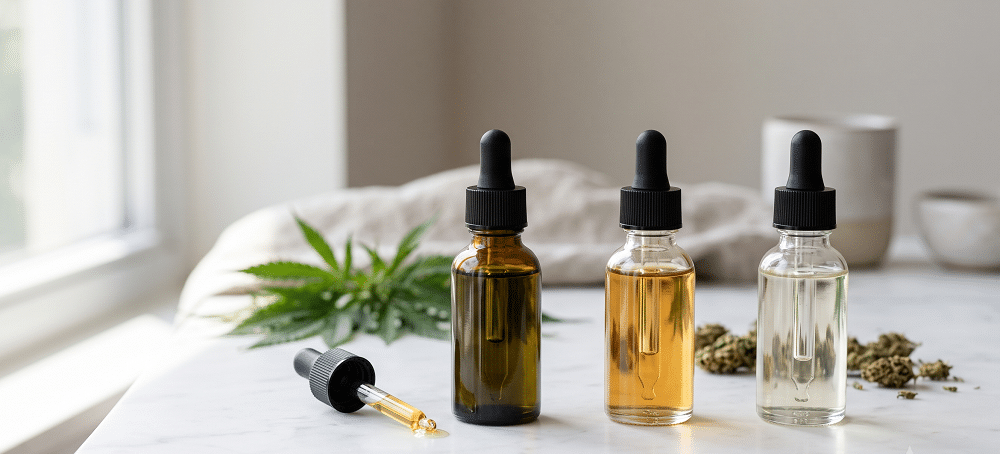
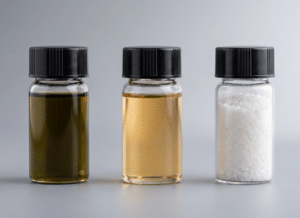
Full-spectrum hemp products contain all of the plant’s cannabinoids, terpenes, and flavonoids including trace Delta-9 THC. Broad-spectrum products carry the same range of compounds with THC removed. Isolate is a single purified cannabinoid stripped of everything else. The distinction matters because each type produces a different experience, carries different drug testing implications, and suits different buyers depending on their goals and circumstances.
When you’re shopping for hemp products and you see labels that say “full-spectrum,” “broad-spectrum,” or “isolate,” those terms are describing the most fundamental thing about the product: which compounds from the hemp plant are still inside it. They’re not marketing language; they’re structural descriptions of how the extract was made and what it retained.
At Pure Standard Extracts, we work across different formulation types and believe that understanding the difference helps you choose the right product rather than defaulting to whichever term sounds most complete. Each type has a legitimate use case, and the best choice depends on your situation, not the packaging.
Talking through which type fits your situation before buying can save a lot of trial and error. Contact us today to get a straight answer in five minutes.
What Full-Spectrum, Broad-Spectrum, and Isolate Actually Mean
The three terms describe a spectrum of extraction completeness, from the most complete to the most refined. Full-spectrum sits at one end because it retains the broadest range of compounds from the original hemp plant. Isolate sits at the other end, refined down to a single molecule, with broad-spectrum occupying the space between them by retaining most compounds while removing one specific group.
All three start with the same raw material: hemp plant material that contains CBD, minor cannabinoids like CBG, CBN, and Delta-8, terpenes, flavonoids, and trace amounts of Delta-9 THC. What happens after extraction is where the paths diverge. Full-spectrum extracts preserve everything below the legal THC threshold. Broad-spectrum extracts go a step further and remove the THC. Isolate processes take one cannabinoid, most often CBD, and purify it to 95 to 99 percent or greater concentration by removing everything else.
The practical implication is that each type delivers a different amount of the plant’s chemical diversity to the end product. That difference drives the variation in effects, drug testing risk, and appropriate use cases that buyers actually care about.
Full-Spectrum Products Retain the Most of the Hemp Plant
Full-spectrum hemp extracts preserve the complete range of cannabinoids, terpenes, and other plant compounds that exist in hemp below the legal Delta-9 THC threshold of 0.3 percent on a dry weight basis. This includes minor cannabinoids like CBG, CBN, and Delta-8 alongside the dominant CBD content, as well as the terpene profile that gives different strains their distinct aromas.
The argument for full-spectrum products rests on the entourage effect, a concept in cannabinoid research suggesting that the compounds in hemp may work more effectively together than in isolation. The hypothesis is supported by some preliminary research and a significant body of anecdotal user reports, though it has not been definitively established through large-scale clinical trials. The general consumer consensus is that full-spectrum products tend to feel more effective than equivalent isolated products at the same CBD milligram count.
The tradeoff is the THC. Legal full-spectrum products contain under 0.3 percent Delta-9 THC, which is not enough to produce intoxication in most adults, but it is enough to potentially accumulate in the body with regular use and trigger a positive result on a standard THC immunoassay drug test. For buyers who are subject to workplace drug testing or who prefer to avoid THC entirely, full-spectrum is not the right choice regardless of how minor the concentration is.
Broad-Spectrum Products Remove the THC While Keeping Most Everything Else
Broad-spectrum hemp extracts go through an additional processing step after initial extraction to remove detectable THC while preserving the other cannabinoids and terpenes. The result is a product that retains much of the full-spectrum’s chemical diversity without the THC that creates drug testing and personal preference concerns for some buyers.
Broad-spectrum is essentially the middle-ground option for buyers who want the potential benefits of a more complete hemp extract but cannot or do not want to consume any THC. The terpene profile and most minor cannabinoids remain intact, so the theoretical entourage effect is at least partially preserved even without THC’s contribution. Whether the absence of THC meaningfully changes the experience compared to full-spectrum depends on the individual, and user reports on this point are genuinely mixed.
The limitation of broad-spectrum products is that “THC-free” on a label does not always mean zero THC at the molecular level. THC removal processes can bring levels below the detection threshold of most tests without fully eliminating the compound. Buyers with extremely strict zero-tolerance drug testing requirements should understand that broad-spectrum, while significantly lower risk than full-spectrum, is not the same assurance as a pure isolate.
Isolate Is the Most Refined Option and the Furthest From the Whole Plant
Isolate is a single cannabinoid, most commonly CBD, that has been purified by removing all other plant compounds including other cannabinoids, terpenes, flavonoids, and plant material. The resulting substance is typically a white powder or crystal that is 95 to 99 percent or higher purity of that single cannabinoid and contains no detectable THC.
The appeal of isolate is precision and certainty. Buyers who want to take a specific measured dose of a single cannabinoid without any other variables can do that with an isolate in a way that is not possible with full-spectrum or broad-spectrum products, where the cannabinoid mix shifts somewhat between batches. Isolate is also flavorless and odorless, which makes it easier to add to food, beverages, or capsules without the hemp flavor that full-spectrum and broad-spectrum products carry.
The cost of all that refinement is the loss of the chemical complexity that the entourage effect concept suggests may be valuable. Isolate users often find they need a higher milligram dose to achieve similar results compared to full-spectrum products, which is consistent with the entourage effect hypothesis, though it’s not proof of it. Users with zero-tolerance drug testing policies, THC allergies, or a genuine preference for single-compound products are the strongest candidates for isolate-based products.
How to Choose the Right Type for Your Situation
The right choice between full-spectrum, broad-spectrum, and isolate depends almost entirely on two questions: whether you have any drug testing exposure and how much chemical complexity you want in your hemp product. Everything else is secondary.
If you are subject to regular THC testing and a positive result would have consequences, full-spectrum is off the table regardless of your other preferences. In that scenario, broad-spectrum reduces your risk, and isolation eliminates it almost entirely.
If drug testing is not a concern, the argument for full-spectrum is stronger. Most users who have tried both report more noticeable effects from full-spectrum products compared to equivalent isolate products. If you are new to hemp cannabinoids and want to start with the simplest possible product to understand your baseline response before introducing more variables, isolate gives you that clean starting point. Our lab reports for every product show the full cannabinoid profile, so you can verify exactly which type you’re buying and what compounds are present in what concentrations.
Looking at the certificate of analysis before purchasing is the most reliable way to confirm what a product actually contains, regardless of what the label says the extract type is. A broad-spectrum product that still shows detectable THC on its lab report is not fully delivering on its category promise; a full-spectrum product with a clean terpene panel may be less complex than marketed. Ourproduct lineup includes options across cannabinoid types with third-party documentation for each.
The Type of Extract Matters as Much as the Milligram Count
Choosing a hemp product based only on milligrams without knowing the extract type is like picking a wine by alcohol content alone, without knowing if it is red, white, or rosé. At Pure Standard Extracts, we include the full cannabinoid breakdown in every lab report so you can evaluate both factors at once.
If you want a recommendation based on your specific goals or a walk-through of what’s in any product we carry, reach out before you buy. Call us todayand our team will give you a straight answer about which extract type makes the most sense for your situation.
Disclaimer: These statements have not been evaluated by the Food and Drug Administration. This product is not intended to diagnose, treat, cure, or prevent any disease. Hemp-derived cannabinoid products are intended for adults 21 and older. Consult a qualified healthcare provider before use, especially if you are pregnant, nursing, have a medical condition, or take prescription medications.
Frequently Asked Questions
What is the difference between full-spectrum and broad-spectrum CBD?
Full-spectrum CBD contains all cannabinoids, terpenes, and plant compounds from hemp including trace Delta-9 THC up to 0.3 percent. Broad-spectrum CBD retains most of those compounds but has the THC removed or reduced to below detectable levels. Both are argued to produce more complete effects than isolate, but broad-spectrum is the preferred choice for buyers who want to avoid any THC exposure.
Is full-spectrum or isolate better for CBD?
Most users and early research suggest full-spectrum produces stronger effects at equivalent milligram doses compared to isolate, consistent with the entourage effect concept that cannabinoids work more effectively in combination than alone. Isolate is the better choice for buyers with drug testing requirements or strict THC-free preferences, since it contains no other cannabinoids or THC.
Will full-spectrum CBD show up on a drug test?
Full-spectrum CBD products contain trace Delta-9 THC, which can accumulate with regular use and potentially trigger a positive on a standard immunoassay drug test. If you are subject to workplace or legal drug testing, using full-spectrum hemp products carries real risk of a positive result. Broad-spectrum or isolate products are significantly lower risk.
What does broad-spectrum mean on a hemp label?
Broad-spectrum on a hemp label indicates that the extract retains multiple cannabinoids and terpenes from the hemp plant but has had detectable THC removed. It sits between full-spectrum and isolate in terms of chemical complexity. Broad-spectrum is not always completely THC-free at the molecular level; checking the product’s lab report directly is the only way to confirm the actual THC status.
Is CBD isolate better for first-time users?
CBD isolate is often recommended for first-time users who want to start with a single well-defined compound and understand their baseline response before trying more complex extracts. It is flavorless, straightforward to dose, and carries no THC exposure risk. Experienced users frequently move toward full-spectrum or broad-spectrum products for a more complete experience.
What is the entourage effect?
The entourage effect is a concept in cannabinoid research describing the hypothesis that the compounds in hemp, including cannabinoids, terpenes, and flavonoids, may work more effectively together than any single compound in isolation. It is the primary argument in favor of full-spectrum and broad-spectrum products over isolate. The concept is supported by preliminary research and extensive user reports but has not been definitively proven in large-scale clinical trials.
Does broad-spectrum CBD have THC?
Broad-spectrum CBD products are processed to remove detectable THC, but the process does not always achieve absolute zero THC at the molecular level. “Undetectable THC” and “zero THC” are not the same thing. If you require guaranteed zero THC for personal, professional, or legal reasons, a verified isolate product provides stronger assurance than broad-spectrum. Review the product’s certificate of analysis to confirm the actual THC reading.
How do I know which type of CBD extract a product uses?
The extract type should be disclosed on the product label as full-spectrum, broad-spectrum, or isolate. To verify independently, review the product’s third-party certificate of analysis, which lists the full cannabinoid panel including all THC isomers. A full-spectrum product will show trace THC; a genuine broad-spectrum will show THC at below-detectable levels; an isolate will show only the target cannabinoid with everything else at zero or trace.
Key Takeaways A Delta-8 gummy starts as hemp extract, gets blended into a warm gelling base, then set in moulds and finished. The tricky part is keeping the mix even so every piece comes out the same. Hemp is extracted, the extract is blended into a warm gelling base along
Key Takeaways Fruit flavours dominate the Delta-8 gummy category because they sit well alongside the taste of hemp extract. Flavour is mostly a preference question, though it can hint at how a product was built. Fruit is the overwhelming answer. Berry, citrus, tropical and stone fruit turn up most across
Key Takeaways Live rosin gummies are edibles made with a solventless hemp extract rather than a refined, neutral base. The difference shows up mostly in how they taste, since the extract carries the plant’s own character. Live rosin gummies are edibles built around live rosin, a solventless extract pressed from

 The argument for full-spectrum products rests on the entourage effect, a concept in cannabinoid research suggesting that the compounds in hemp may work more effectively together than in isolation. The hypothesis is supported by some preliminary research and a significant body of anecdotal user reports, though it has not been definitively established through large-scale clinical trials. The general consumer consensus is that full-spectrum products tend to feel more effective than equivalent isolated products at the same CBD milligram count.
 If drug testing is not a concern, the argument for full-spectrum is stronger. Most users who have tried both report more noticeable effects from full-spectrum products compared to equivalent isolate products. If you are new to hemp cannabinoids and want to start with the simplest possible product to understand your baseline response before introducing more variables, isolate gives you that clean starting point. Our