Free Shipping over $75 | Ships Out Same-Day | SAVE 30% STOREWIDE, CODE "HALLOWEEN30"
Do Delta-8 Gummies Show Up on a Drug Test?
Yes. Delta-8 gummies will most likely show up on a standard urine drug test because most immunoassay screens detect 11-nor-9-carboxy-THC, a metabolite produced by Delta-8 and Delta-9 alike. The test cannot distinguish between the two isomers. How long Delta-8 remains detectable depends on your usage frequency, dose size, body composition, and metabolism. Regular users face significantly longer detection windows than occasional users.
Delta-8 being derived from legal hemp does not give it a pass on standard drug testing panels. This is the most common misconception among people who switch from Delta-9 to Delta-8, and the chemistry behind why it is wrong is straightforward.
At Pure Standard Extracts, we believe that informed use means understanding the full picture of what any cannabinoid does in your body, including what it leaves behind. Delta-8 gummies are real products that produce real metabolites, and those metabolites are exactly what standard drug tests screen for.
If you want to understand how a specific product in our lineup relates to drug testing or discuss your particular situation before ordering, contact us today and we will give you an honest answer. We do not minimize this topic.
How Do Standard Drug Tests Actually Detect THC?
Understanding why Delta-8 triggers drug tests requires understanding what those tests actually measure. Most workplace and legal drug panels are not testing for THC molecules directly; they are testing for what THC leaves behind after your body processes it.
Immunoassay Screens: The Standard Test Used in Most Workplace and Legal Panels
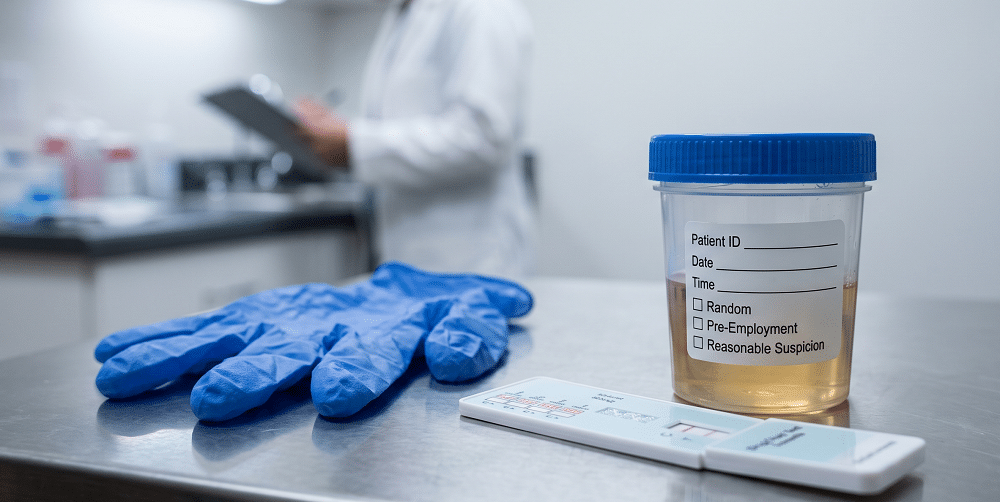
The vast majority of urine drug tests use an immunoassay screening method. Immunoassay tests use antibodies that bind to specific compounds and their metabolites; when the compound is present above a threshold concentration, the test reads positive. These tests are fast, inexpensive, and designed for high-volume screening rather than precise chemical identification.
They are the first-line test in virtually all standard five-panel and ten-panel drug screening programs used by employers, probation systems, and pre-employment screening services. The speed and low cost of immunoassay testing is why it dominates initial screening even though it cannot provide the chemical precision of confirmatory methods.
The immunoassay for THC is specifically calibrated to detect 11-nor-9-carboxy-THC, also called THC-COOH, the primary fat-soluble metabolite produced when the liver processes any form of THC. Because the test is looking for this downstream metabolite rather than THC itself, it is indifferent to whether the THC came from Delta-9, Delta-8, or any other THC isomer.
What Threshold Actually Triggers a Positive Result
The most commonly used cutoff for THC-COOH on initial immunoassay screens is 50 nanograms per milliliter in urine, which is the threshold established by SAMHSA guidelines and adopted by most federally regulated workplace testing programs. At or above 50 ng/mL, the test reads as a presumptive positive. Below that threshold, it reads as negative regardless of whether some amount of the metabolite is present.
Individual metabolism, hydration level at the time of the test, and the timing of the last dose all affect where your reading falls relative to that threshold on any given day. The cutoff is not a binary on/off for whether you consumed Delta-8; it is a concentration threshold that reflects the interaction of consumption history and clearance rate at a specific point in time.
Confirmatory Testing: What GC/MS Analysis Does After an Initial Positive
A presumptive positive from an immunoassay does not automatically mean a confirmed positive result. Most programs with any consequence attached to a positive result follow up a reactive immunoassay with a gas chromatography/mass spectrometry test, commonly abbreviated as GC/MS. GC/MS is a confirmatory method that provides chemical identification and precise quantification of compounds in the sample.
The SAMHSA-recommended cutoff for GC/MS confirmation of THC-COOH is 15 ng/mL, a lower threshold than the 50 ng/mL screening cutoff. This two-tier structure reduces the rate of false positives that would occur if every low-concentration screen result were treated as confirmed.
Confirmatory GC/MS testing identifies THC-COOH with high specificity but still does not reliably distinguish between Delta-8-derived and Delta-9-derived THC-COOH. Both isomers produce the same primary metabolite through overlapping metabolic pathways, and that metabolite is the one GC/MS confirms.
Does Delta-8 Produce the Same Metabolite That Drug Tests Flag?
Yes. The metabolic pathway through which your body processes Delta-8 THC produces the same primary urinary metabolite that standard drug tests detect. Legal source has no bearing on how the test chemistry responds to that metabolite.
Delta-8 and Delta-9 Share a Primary Metabolite: 11-nor-9-carboxy-THC
Both Delta-8 THC and Delta-9 THC are metabolized in the liver by cytochrome P450 enzymes and produce 11-nor-9-carboxy-THC as the dominant urinary metabolite. The metabolic pathways are not identical and differ somewhat in intermediate steps, but the end product that accumulates in urine is the same.
Standard drug tests target that shared end product, which is why they cannot distinguish the source isomer. From the screening test’s perspective, Delta-8 and Delta-9 are functionally the same at this metabolic stage.
Why Standard Immunoassay Tests Cannot Tell Delta-8 From Delta-9
Immunoassay tests are designed around antibody recognition of specific chemical structures. The antibodies used in standard THC immunoassays have cross-reactivity with THC-COOH from multiple sources, including Delta-8-derived THC-COOH, because the metabolite’s structure is similar enough across isomers to trigger binding. The test was engineered to catch a broad category of THC use, not to distinguish specific isomers.
There is no current commercial immunoassay that reliably differentiates Delta-8 from Delta-9 based on metabolite detection. That gap is by design rather than limitation; the public health intent behind workplace screening has always been to detect THC use broadly rather than to parse isomer-level distinctions.
How Confirmatory GC/MS Interacts With Delta-8 Results
Confirmatory GC/MS testing can detect and quantify THC-COOH with precision, but standard GC/MS panels used in workplace drug testing are typically not configured to distinguish Delta-8-derived from Delta-9-derived metabolites. Some specialized laboratory methods, particularly liquid chromatography/tandem mass spectrometry, can potentially differentiate the parent compounds, but these tests are not part of standard drug testing protocols and are not routinely run in response to a presumptive positive. Review our lab reports if you want to understand the full cannabinoid profile of any product before making decisions about use timing.
How Long Does Delta-8 From Gummies Remain Detectable?
Detection windows for Delta-8 follow the same general pattern as Delta-9 because the same metabolite drives both. THC-COOH is fat-soluble and binds to fatty tissue, which means it releases back into the bloodstream and urine slowly over time rather than clearing quickly the way water-soluble compounds do.
Detection Window for Occasional Delta-8 Gummy Use
For infrequent users, typically defined as one to three uses within the prior month, THC-COOH from a single Delta-8 dose generally clears to below the 50 ng/mL screening threshold within three to four days. This range reflects average metabolism and typical doses in the 10 to 25mg range. Individual variation is significant, and users at the higher end of the dose range or with slower metabolism may remain detectable for five to seven days after a single use.
The size of the dose also matters within this occasional-use category. Someone who takes 10mg once has a meaningfully different clearance curve than someone who takes 50mg once. Larger doses deposit more THC-COOH into fatty tissue in a single event, which extends the elimination period even when use frequency is low.
Edible forms add another variable: the liver conversion to 11-hydroxy-THC is more complete with edibles than with inhaled Delta-8, which means gummies may deposit more metabolite per milligram of Delta-8 consumed.
Detection Window for Regular or Daily Delta-8 Gummy Use
Regular users, typically defined as daily or near-daily use, accumulate THC-COOH in fatty tissue faster than it clears. For this group, detection windows commonly extend from seven to thirty days after last use, with some heavy daily users testing positive for longer.
A thirty-day abstinence window is often cited as a conservative threshold for high-frequency users, but it is not a guarantee for all individuals. The only reliable way to know whether you are below the 50 ng/mL screening threshold before a scheduled test is to use a home immunoassay urine test kit.
Body fat percentage is the most underestimated variable for regular users. Because THC-COOH binds to fatty tissue, higher body fat extends the storage reservoir and slows the rate at which the metabolite re-enters circulation for excretion. Two users with identical usage histories and dose sizes can have detection windows that differ by ten or more days based on body composition alone. This is why population-level estimates are averages; individual variation is wide enough that any specific prediction carries real uncertainty.
Factors That Accelerate or Extend Delta-8 Clearance
Body fat percentage, overall metabolic rate, physical activity level, hydration, and kidney function all affect how quickly THC-COOH clears. Users with higher body fat percentages tend to have longer detection windows because the metabolite binds to fatty tissue. Regular aerobic exercise can mobilize stored THC-COOH and temporarily increase urinary concentration, which is why some users report a positive result after intensive exercise despite recent abstinence.
Well-hydrated individuals tend to have lower urinary concentrations at the time of testing, but extreme hydration to the point of diluting the sample below creatinine thresholds often flags the sample as adulterated or diluted. That outcome is treated as a failed test in most programs rather than a negative result.
Are There Drug Tests That Can Distinguish Delta-8 From Delta-9?
The short answer is that standard commercial drug tests cannot reliably make this distinction, and the longer answer does not meaningfully change the practical outcome for most users. Specialized forensic laboratory methods can differentiate Delta-8 from Delta-9 at the parent compound level using certain mass spectrometry configurations, but those methods are not part of the standard protocols used by workplace testing vendors, probation departments, or pre-employment screening programs.
Even when an employer becomes aware that the user claims legal hemp-derived Delta-8 as the source of a positive result, the policy landscape does not protect users. Most private employer testing policies are written around the metabolite threshold, not the legal source of the cannabinoid; a confirmed positive for THC-COOH is treated as a policy violation regardless of where the THC isomer came from.
The practical implication is that legal status at the point of sale does not translate to protection at the point of testing. Users who are subject to drug testing for employment, legal compliance, sports participation, or other regulated contexts should treat Delta-8 gummies as equivalent in drug testing risk to Delta-9 THC products.
Should You Use Delta-8 Gummies if You Face Drug Testing?
Delta-8 gummies are a legitimate product derived from federally legal hemp, but their legal source does not change how standard drug test chemistry responds to them; if you are subject to any form of drug testing where a positive result carries consequences, Delta-8 carries the same risk as Delta-9. At Pure Standard Extracts, we would rather you know this before you order than find out after a test.
If you want to understand what is in any specific product before making a decision, the cannabinoid profile is there to read. Call us today and our team will walk you through the product documentation and help you make the right call for your situation.
Disclaimer: These statements have not been evaluated by the Food and Drug Administration. This product is not intended to diagnose, treat, cure, or prevent any disease. Hemp-derived cannabinoid products are intended for adults 21 and older. Consult a qualified healthcare provider before use, especially if you are pregnant, nursing, have a medical condition, or take prescription medications. This article is for informational purposes only and does not constitute legal advice.
Frequently Asked Questions
Do Delta-8 gummies show up on a drug test?
Yes. Delta-8 gummies will show up on a standard urine drug test because they produce the same primary metabolite, 11-nor-9-carboxy-THC, that standard immunoassay screens are designed to detect. The test does not distinguish between Delta-8 and Delta-9 metabolites. If you are subject to drug testing, Delta-8 gummies carry the same risk as Delta-9 THC products.
How long does Delta-8 stay in your system after eating a gummy?
Delta-8 metabolites can remain detectable in urine for three to four days after a single dose for occasional users, and up to seven to thirty days or longer for daily users. The detection window is driven by 11-nor-9-carboxy-THC, which is fat-soluble and clears slowly from fatty tissue. Body composition, metabolism, dose size, and frequency of use all affect clearance time.
Will a drug test know the difference between Delta-8 and Delta-9?
Standard commercial drug tests cannot reliably distinguish between Delta-8 and Delta-9 metabolites. Both cannabinoids produce the same primary urinary metabolite, and immunoassay screens are calibrated to detect that metabolite without differentiating its source. Specialized forensic laboratory methods can in some cases differentiate the parent compounds, but these are not part of standard workplace or legal drug testing panels.
Does hemp-derived Delta-8 get a pass on drug tests?
No. The legal status of Delta-8 under federal hemp law does not affect how drug test chemistry responds to its metabolites. Standard urine tests check for 11-nor-9-carboxy-THC regardless of where the parent THC compound came from. Most employer and legal drug testing policies are written around the metabolite threshold, not the legal source of the cannabinoid.
How can I clear Delta-8 from my system faster?
There is no method that reliably accelerates Delta-8 clearance beyond maintaining healthy hydration, regular aerobic exercise, and a sufficient time period from last use. Time is the most reliable variable. Home immunoassay urine test kits, available at most pharmacies, allow you to check your own approximate THC-COOH concentration relative to the 50 ng/mL screening threshold before a scheduled test.
Will a one-time use of Delta-8 gummies show up on a drug test?
A single use of a Delta-8 gummy in the standard 10 to 25mg range may clear below the 50 ng/mL screening threshold within three to four days for most users with average metabolism and body composition. However, dose, individual metabolism, and timing all create meaningful variation. Some one-time users may remain detectable for five to seven days. There is no risk-free clearance timeline that applies universally.
Can you tell your employer the Delta-8 was legal hemp?
You can provide that information, but it does not guarantee a reversal of a positive test result. Most private employer drug testing policies are written around the metabolite threshold rather than the legal source of the cannabinoid. A confirmed positive for THC-COOH is typically treated as a policy violation under those policies regardless of where the THC isomer came from. Individual employer responses vary, and some may investigate further; others will not.
Is Delta-8 detectable in hair follicle or blood tests?
Delta-8 metabolites are potentially detectable in hair follicle tests, which generally have a detection window of up to 90 days for regular users, though hair follicle testing is less commonly used than urine testing in standard employment screening. Blood tests for THC compounds have a much shorter detection window, typically within 12 to 24 hours for occasional users, because THC parent compounds clear the bloodstream faster than THC-COOH clears from urine.
Key Takeaways A Delta-8 gummy starts as hemp extract, gets blended into a warm gelling base, then set in moulds and finished. The tricky part is keeping the mix even so every piece comes out the same. Hemp is extracted, the extract is blended into a warm gelling base along
Key Takeaways Fruit flavours dominate the Delta-8 gummy category because they sit well alongside the taste of hemp extract. Flavour is mostly a preference question, though it can hint at how a product was built. Fruit is the overwhelming answer. Berry, citrus, tropical and stone fruit turn up most across
Key Takeaways Live rosin gummies are edibles made with a solventless hemp extract rather than a refined, neutral base. The difference shows up mostly in how they taste, since the extract carries the plant’s own character. Live rosin gummies are edibles built around live rosin, a solventless extract pressed from

 The SAMHSA-recommended cutoff for GC/MS confirmation of THC-COOH is 15 ng/mL, a lower threshold than the 50 ng/mL screening cutoff. This two-tier structure reduces the rate of false positives that would occur if every low-concentration screen result were treated as confirmed.
 A thirty-day abstinence window is often cited as a conservative threshold for high-frequency users, but it is not a guarantee for all individuals. The only reliable way to know whether you are below the 50 ng/mL screening threshold before a scheduled test is to use a home immunoassay urine test kit.