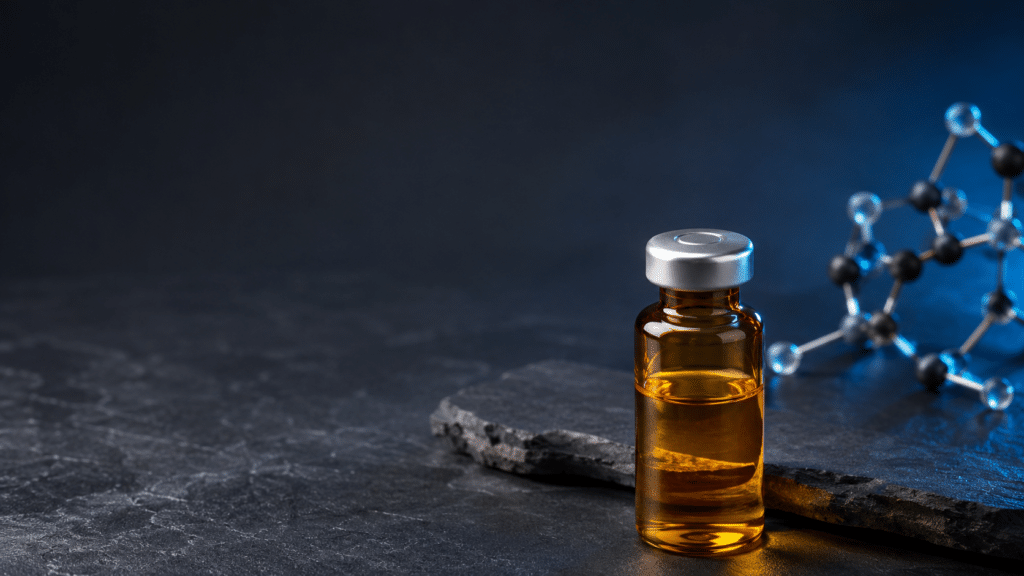
HHC-P, or hexahydrocannabiphorol, is a hydrogenated hemp cannabinoid that pairs the extended seven-carbon side chain of THC-P with the structural stability of HHC. It belongs to the “phorol” class of cannabinoids, a group of compounds that may bind more readily to CB1 receptors than their standard counterparts. HHC-P is one of the key cannabinoids in our KO Blend, designed for adults 21 and older who want a potent, lab-tested hemp experience.
HHC-P is one of the newer cannabinoids showing up in premium hemp formulas, but most of what’s written about it is vague or technically inaccurate. It deserves a clear, honest explainer, and that’s exactly what this is.
At Pure Standard Extracts, we believe you should understand what’s in your hemp products before you try them. That means covering the chemistry, the comparisons, and the honest limitations of what research currently tells us.
If you’re curious about HHC-P and whether it belongs in your routine, contact us today to speak with someone on our team. Keep reading for the full breakdown on the chemistry, the comparisons, and what the evidence actually says.
What exactly is HHC-P, and where does it come from?
HHC-P sits at the intersection of two cannabinoid families you may already know: HHC and THC-P. Understanding each piece of the name makes the whole compound click.
The chemistry, in plain English
HHC-P stands for hexahydrocannabiphorol. Break that down: “hexahydro” means six hydrogen atoms have been added to the molecular structure, following the same hydrogenation process that turns THC into HHC.
“Cannabiphorol” refers to the phorol series, the group of cannabinoids with a seven-carbon (heptyl) side chain instead of the standard five-carbon (pentyl) chain found in THC and HHC.
The result is a molecule with two distinct structural advantages. The longer side chain gives the molecule more surface area to interact with cannabinoid receptors, while the hydrogenated core makes it more chemically stable than its non-hydrogenated cousins.
Where HHC-P comes from
HHC-P is not found in meaningful concentrations in raw hemp plants. It’s produced through a multi-step process: THC-P (itself a naturally occurring, trace cannabinoid, first identified in 2019) is hydrogenated in a lab setting to create HHC-P.
The starting materials are hemp-derived, keeping the final product within the framework of federal hemp law when total Delta-9 THC stays below 0.3%.
This makes HHC-P a semi-synthetic cannabinoid. It’s hemp-derived, lab-converted, and produced via processes similar to those used for HHC, which is consistent with how most advanced hemp cannabinoids are manufactured.
Why it belongs in the “phorol” class
The “P” at the end of HHC-P is the signal that this compound shares the seven-carbon side chain with THC-P. That structural detail matters because the side chain length affects how a molecule fits into the CB1 receptor, the primary cannabinoid receptor in the brain and central nervous system.
A 2019 Scientific Reports study (Citti et al.) found THC-P’s extended side chain gave it significantly higher CB1 binding affinity than standard Delta-9 THC.
A 2025 study in Drug Testing and Analysis (Persson et al.) was among the first to measure HHC-P’s direct CB1 activation, providing functional pharmacological data that the compound had previously lacked, and this structural and pharmacological parallel is why HHC-P is treated as a high-potency cannabinoid within the hemp market.
HHC-P vs HHC vs THC-P: the key differences (and why they matter)
It’s easy to mix up these three compounds because their names overlap. Here’s how to keep them straight.
HHC-P vs HHC: what hydrogenation adds
HHC (hexahydrocannabinol) is the hydrogenated form of standard Delta-9 THC. It’s known for its shelf stability because hydrogenation removes the double bond that’s vulnerable to heat, light, and oxidation, so HHC resists degradation better than THC. The trade-off is that HHC’s effects are generally reported as milder than Delta-9 THC by many users, though individual response varies.
HHC-P takes the same hydrogenated core structure but adds the seven-carbon phorol side chain. In practical terms, HHC-P is expected to be significantly more potent than standard HHC due to that longer chain, while still retaining the stability benefits that hydrogenation provides.
HHC-P vs THC-P: the stability trade-off
THC-P is the non-hydrogenated version of HHC-P. It has the same seven-carbon side chain, but it’s not hydrogenated. THC-P carries the standard double bond that makes it more susceptible to oxidation over time.
HHC-P offers the same phorol-class potency profile in a more stable molecular package. For a hemp product like a disposable vape that needs to maintain quality across weeks or months of use and storage, that stability difference is meaningful. Both are psychoactive cannabinoids; both should be approached with care and a 21+ mindset.
HHC-P vs Delta-8: the big-picture comparison
Delta-8 THC is a milder, more widely known hemp cannabinoid. Many users describe its effects as cleaner and less intense than Delta-9 THC, making it the entry-level comparison point for most hemp shoppers.
HHC-P and Delta-8 are not in the same potency category. Delta-8 sits at roughly half the reported potency of Delta-9 THC; HHC-P, with its phorol-class structure, is expected to substantially exceed Delta-9 in receptor affinity. If you’re new to hemp cannabinoids and Delta-8 is your benchmark, HHC-P warrants a very conservative starting dose.
How potent is HHC-P? What the evidence actually says
The research on HHC-P remains limited but is now developing. Unlike THC-P, which was formally isolated from cannabis and studied in a 2019 peer-reviewed paper, dedicated HHC-P pharmacology arrived in 2025 when Persson et al. published in Drug Testing and Analysis, measuring the 9R isomer’s CB1 activation at an EC50 of 44.4 nM, placing it at roughly twice the potency of standard HHC at CB1.
That said, one in vitro study is a starting point, not a settled picture. The seven-carbon side chain present in HHC-P is the same structural feature that THC-P’s 2019 study linked to dramatically higher CB1 binding affinity, and the hemp market treats HHC-P as high-potency on the basis of that combined chemical and early pharmacological evidence.
Treat HHC-P as a high-potency cannabinoid. Start low, much lower than you’d start with Delta-8 or even standard HHC. If you’re new to intoxicating hemp cannabinoids, build up with milder options first before stepping into the phorol class.
Every batch we produce is third-party tested. Those reports are available in our full cannabinoid lineup, so you can verify potency and purity before you buy.
HHC-P inside the KO Blend: why it’s there and what it does
The KO Blend isn’t a single-cannabinoid formula. It’s a deliberately layered blend of six hemp-derived cannabinoids: Delta-8, THC-P, HHC-P, HHC, CBD, and CBN, each bringing something different to the experience.
HHC-P’s role in the blend is potency and duration. Its high-affinity phorol structure contributes to the intensity ceiling for the formula, while its hydrogenated backbone helps maintain product stability across the full life of the disposable.
THC-P contributes similar high-end potency without the hydrogenated stability advantage. Delta-8 and HHC fill in the middle range. CBD and CBN round out the experience: CBN is studied for its potential role in relaxation, and CBD is the most widely researched hemp cannabinoid with a broad body of structure-function literature.
The result is a cannabinoid stack designed to deliver a complete, layered experience rather than a single sharp note. Learn more about what our KO Blend is and how it was developed, or explore our KO Blend disposable to see the product itself.
The KO Blend is an intoxicating product. All cannabinoids in the formula are psychoactive to varying degrees, and it is intended for adults 21 and older who have experience with hemp-derived cannabinoids and understand their personal tolerance.
Where to start if you’re curious about HHC-P
HHC-P is one of the most structurally interesting cannabinoids in premium hemp formulas, and that chemistry is exactly why we included it in our KO Blend. At Pure Standard Extracts, we believe in formulas that deliver real results, not just labels with impressive names.
Start low, go slow, and choose products with verifiable third-party lab reports. Call us today to learn which of our lab-tested products is the right starting point for your experience level and goals.
Disclaimer: These statements have not been evaluated by the Food and Drug Administration. This product is not intended to diagnose, treat, cure, or prevent any disease. For adults 21 and older. Individual results vary. Consult your healthcare provider before use, especially if you are pregnant, nursing, or taking medication.
Frequently Asked Questions
What is HHC-P?
HHC-P (hexahydrocannabiphorol) is a hemp-derived cannabinoid produced by hydrogenating THC-P. It combines a seven-carbon side chain, the same structure linked to high CB1 receptor affinity in the phorol cannabinoid class, with the molecular stability of hydrogenation. HHC-P is an intoxicating cannabinoid intended for adults 21 and older.
Is HHC-P stronger than THC-P?
Peer-reviewed research comparing HHC-P and THC-P potency directly does not exist yet. Both belong to the phorol class and share the seven-carbon side chain associated with high CB1 binding affinity. THC-P’s potency was documented in a 2019 Scientific Reports study; HHC-P’s pharmacological profile is not yet peer-reviewed. Treat both as high-potency cannabinoids and start with a minimal dose.
What does HHC-P feel like?
HHC-P is a psychoactive cannabinoid, and users commonly describe the phorol class as producing intense, long-lasting effects more so than standard Delta-8 or HHC. Individual response varies based on tolerance, body weight, and consumption method, and these descriptions have not been evaluated by the FDA. We cannot predict any individual’s experience.
Is HHC-P natural or synthetic?
HHC-P is semi-synthetic. THC-P occurs naturally in hemp in trace amounts, but HHC-P is produced by hydrogenating THC-P in a lab setting. The starting materials are hemp-derived, and the final product is marketed under federal hemp law. “Semi-synthetic” is accurate because the process involves a chemical conversion step beyond extraction.
How is HHC-P different from HHC?
HHC (hexahydrocannabinol) is the hydrogenated form of standard Delta-9 THC and carries a five-carbon side chain. HHC-P adds the seven-carbon phorol side chain to that same hydrogenated core. That side-chain extension is what puts HHC-P in the high-potency category, while standard HHC is generally reported as milder, closer in intensity to a reduced-strength Delta-9 experience.
Will HHC-P show up on a drug test?
HHC-P is very likely to trigger a positive result on a standard immunoassay urine drug test. These tests screen for THC metabolites, and cannabinoids in the phorol class are expected to produce structurally similar metabolites (no validated immunoassay cross-reactivity study specific to HHC-P with confirmed detection thresholds exists as of 2026, so this is an informed inference from the compound class). Avoid HHC-P entirely if you are subject to testing for employment, sports, legal, or any other purpose.
Is HHC-P legal?
Under current federal hemp law as of 2026 (the 2018 Farm Bill), hemp-derived cannabinoids with less than 0.3% Delta-9 THC are federally permissible, and HHC-P products from compliant hemp companies meet that threshold. However, state laws vary significantly, and some states restrict or ban intoxicating hemp-derived cannabinoids regardless of federal status. Always check your state’s current laws before purchasing.
How much HHC-P should a beginner take?
If you’re new to HHC-P, start with the smallest amount your product allows, typically one short puff on a disposable, then wait at least 30 minutes before reassessing. HHC-P belongs to the high-potency phorol class and is not recommended as a first cannabinoid experience. Build tolerance gradually with milder cannabinoids (Delta-8, CBD) before exploring HHC-P, and consult your healthcare provider if you have any medical considerations.